Best Neck Stretchers of 2026: Four Picks, One to Skip
Four neck traction devices for desk-worker neck tightness: a floor-based stretcher, a hanging hammock, a firm block and a strap. Plus the spiky gadget we'd skip.
The Neck Hammock
The Original Neck Hammock Neck Stretcher - Cervical Traction Device…
Lumia
Cervical Orthotic Traction Block | Firm | Spinal & Neck Alignment |…
On this page
Most neck stiffness in adults is muscular and postural. Long days of forward-head computer posture build chronic tension in the upper traps, suboccipitals, and deep neck flexors. A neck stretcher, any of several devices that gently traction or release these muscle groups, can help break that pattern with a short daily routine.
We chose the picks below from manufacturer specs and Amazon buyer reviews; we do not physically test products. Four made the list. One, an acupressure-spike “cervical traction” gadget, gets a Skip pick at the end.
The short version
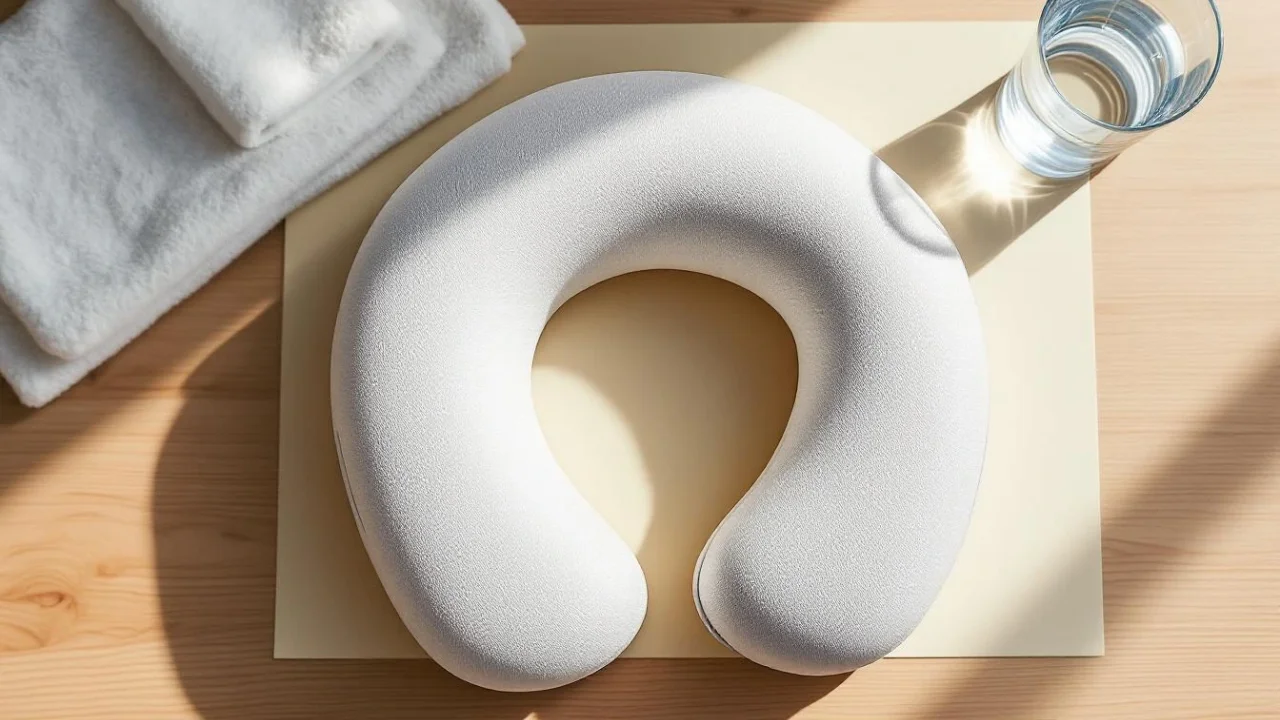
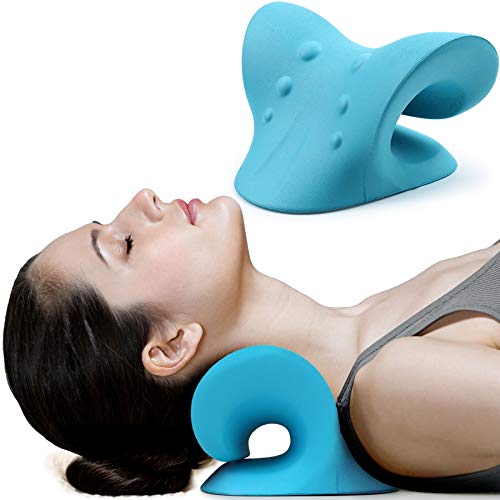
- Top pick, RESTCLOUD Neck and Shoulder Relaxer. Curved floor-based foam device. The default first purchase for desk-worker tightness. See our full review.
- Alternative, The Original Neck Hammock. A hanging fabric cradle on adjustable straps. For users who prefer hanging-style decompression.
- Also consider, Lumia Wellness Cervical Orthotic Block. Firm closed-cell foam block with a 3-height adjustable design.
- For travel, Neck Stretcher Strap. Compact strap-style device. Packs in a carry-on; works in hotel rooms.
- Skip, generic acupressure-spike “cervical traction” devices. Different category. Plastic spikes that dig into the neck. Not the same mechanism, often counterproductive.
At a glance
| Pick | Best for | Mechanism | Where |
|---|---|---|---|
| RESTCLOUD | Desk-worker tightness | Floor-based curved foam | Check on Amazon |
| Neck Hammock | Hanging-style traction | Fabric cradle on straps | Check on Amazon |
| Lumia Block | Firm, adjustable height | Floor-based firm foam | Check on Amazon |
| Neck Stretcher Strap | Travel | Strap-based decompression | Check on Amazon |
What to look for in a neck stretcher
Three categories, three different mechanisms:
Floor-based arc devices (RESTCLOUD, Lumia). You lie on your back, place the device under your neck, and let gravity provide gentle traction while your bodyweight stretches the upper traps. Easiest to start with. Short sessions. No setup beyond lying down.
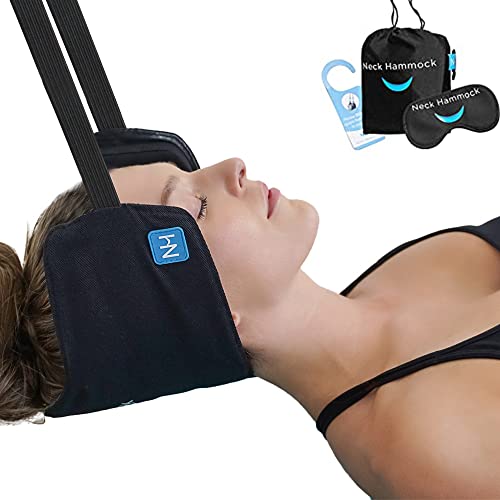
Hanging hammocks (Original Neck Hammock). A fabric cradle on straps. Your head rests inside and the cradle provides the traction. Better for users who feel floor devices aren’t the right fit.
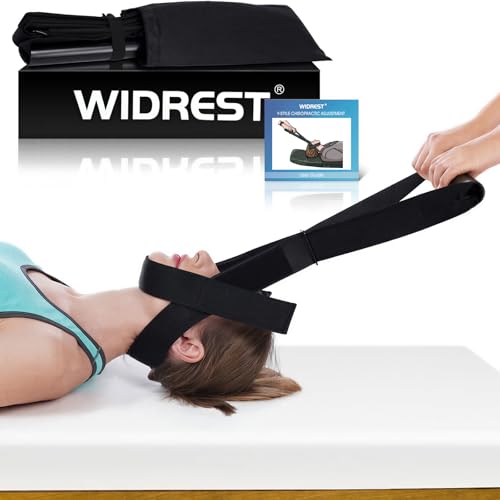
Strap-based devices (Neck Stretcher Strap). A strap around your head with a chin belt, pulled to apply traction. You (or a helper) control the force manually. Travel-friendly. Useful for situational relief rather than sustained sessions.
The most important variable across all three is whether the user actually uses the device consistently. The short daily habit beats the long session you do once. Adoption matters more than peak intensity.
The picks
1. Top pick: RESTCLOUD Neck and Shoulder Relaxer
Best for: Desk workers with chronic upper-trap and suboccipital tightness who want a simple daily routine.
Skip if: You have acute neck injury, recent whiplash, or undiagnosed neck pain.
The RESTCLOUD is the default answer for first-time neck stretcher buyers because it does the basic job (gentle cervical traction, upper-trap stretch) simply.
The wave-shaped polyurethane foam cradles the cervical spine while your bodyweight handles the rest. RESTCLOUD recommends 10 minutes per session, up to 3 times a day, with beginners starting at shorter 5-minute sessions, and says it can’t be used as an ordinary pillow all night.
The main drawback is the initial sensation. RESTCLOUD notes some slight discomfort at first and says most users find their ideal comfort after an adjustment period of 1–2 weeks; in Amazon’s review summary, some buyers find it surprisingly comfortable while others say it’s too hard. Fold a thin towel over the device for the first few sessions to ease in.
Read the full review: RESTCLOUD Neck and Shoulder Relaxer Review
2. Alternative: The Original Neck Hammock
Best for: Users who’ve tried floor-based devices and want a different style of traction. People who prefer hanging-style decompression.
Skip if: You have neck instability or any condition where traction is contraindicated.
The Neck Hammock is a hanging fabric cradle (100% polyester) on adjustable 100cm straps. You let your head rest in the hammock and it provides the traction. The maker describes it as portable and quick to set up, and notes it is a physical therapy method that does not provide instant pain relief but works gradually through consistent use.
Buyers in Amazon’s review summary describe a great neck stretch and good pain relief; effectiveness is mixed, and some report the clip breaking.
3. Also consider: Lumia Wellness Cervical Orthotic Block
Best for: Users who want a firm block-style device with adjustable height.
Skip if: You want a softer feel. You have neck instability.
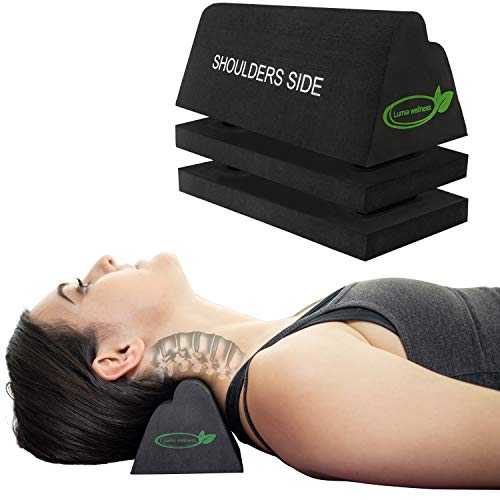
The Lumia is a firm block made of closed-cell EVA foam, with a 3-height adjustable design. Lumia Wellness says it targets the entire cervical spine by using different placements and suggests 10 minutes a day.
Buyers in Amazon’s review summary find it effective for neck and shoulder pain relief, easy to adjust in height and worth the price; others say the material is too hard, and several report discomfort during initial use. For most home users the RESTCLOUD is the right starting point; the Lumia is the right second choice for users who want a firmer block.
4. For travel: Neck Stretcher Strap
Best for: Frequent travelers, business trips, hotel-stay users who want neck decompression without checked luggage.
Skip if: You want a substitute for a dedicated home device. The strap is supplementary, not primary.
A simple strap system from WIDREST: a neck stretcher strap and a chin strap with hook-and-loop closure. Traction comes from pulling the strap.
This is a meaningfully different category from arc-based devices. The traction is hand-controlled, which means it’s only as strong as the pull applied. Buyers in Amazon’s review summary note the tension-loosening effect but say it needs a helper to pull it, and report mixed results with the velcro. For situational relief (hotel desk, office break), it’s a practical option.
Pack it in your carry-on. Use it briefly when you feel neck stiffness building. Don’t expect it to replace a real home device.
Skip pick: Generic acupressure-spike “cervical traction” devices
Why we’d skip them: A common category on Amazon: molded plastic devices that look similar to the RESTCLOUD but with rows of pressure-point spikes on the contact surface. Marketed as “cervical traction” but functionally they’re acupressure tools.
The spikes dig into the neck. For users with chronic neck tension, this can feel intense but doesn’t provide the actual cervical traction the marketing implies. The mechanism is different (pressure stimulation rather than vertebral decompression) and the comfort is worse.
If you want acupressure stimulation on the neck, that’s a different category of product. If you want cervical traction, get a smooth-surface device (RESTCLOUD, Lumia) instead.
How we picked
We chose from Amazon listing data and buyer review summaries. Excluded any device with non-traction mechanisms (massagers, heat-only devices, electronic stimulators). Excluded acupressure-spike variants.
When to see a clinician instead
A neck stretcher is appropriate for:
- Postural neck tightness from prolonged sitting
- Mild-to-moderate chronic upper trap and suboccipital tension
- General stiffness without nerve involvement
A neck stretcher is not appropriate for:
- Acute neck injury or recent whiplash
- Pain that radiates down the arms or causes hand numbness
- Severe headaches associated with neck symptoms
- Any neck pain that’s worsening rather than chronic-stable
- Recent surgery
If your symptoms fall in the “not appropriate” category, see a physician or physical therapist. Self-treatment with traction devices can mask serious problems or make them worse.
Frequently asked
How long until I see results? Some buyers report relief soon after starting; the Neck Hammock’s maker says relief comes gradually through consistent use, and RESTCLOUD mentions an adjustment period.
Is it safe to use every day? For most users, yes, within the maker’s guidance. RESTCLOUD, for example, recommends 10 minutes per session, up to 3 times a day, and warns that prolonged or excessive use may cause discomfort, soreness, or dizziness. Listen to your body. If you feel worse after sessions, stop and reassess.
Can I sleep on one? No. Active traction work requires being present and ending the session. Sleeping on a traction device can cause prolonged compression or stretching of the spine and isn’t recommended.
Should I use heat or ice with it? Heat before a session can loosen tight muscles and make the stretch more comfortable. Ice after is reasonable if you’ve been particularly aggressive.
Will it help my migraines? For tension headaches related to upper-neck tightness, it may help. For migraines specifically, it’s not a primary option. See our ice packs for migraines roundup for migraine-specific options.
What about pregnancy? Lying flat on a floor-based device can become uncomfortable later in pregnancy, and hanging hammocks may not be comfortable either. Ask your obstetrician before using one.
Final word
Neck stretchers solve a specific problem, postural neck tightness, well for users who use them consistently. The RESTCLOUD is the default first purchase; for everyone else, the question is which of the three other options best fits your specific situation. None of them will fix structural neck problems. All of them, used appropriately, can help break the desk-worker tension cycle.
Not medical advice. We publish consumer product reviews; consult a licensed PT before changing your routine. We earn commissions on qualifying Amazon purchases.