Shoulder Rehab with Resistance Bands: The 4-Exercise Foundation
Four resistance band exercises form the foundation of most shoulder rehab programs. The technique matters; tension levels matter; here's how to do each correctly.
On this page
Shoulder rehab with resistance bands is the gold standard for most shoulder pain. The rotator cuff muscles are small and need light, high-repetition resistance. Bands provide this perfectly. Free weights are too clumsy at this load; cables are gym-bound; the bands win on availability and precision.
This walkthrough covers the four foundation exercises that form the core of most shoulder programs. Add them to whatever specific program your PT prescribed; don’t substitute them entirely without professional guidance.
What you need
- A 5-pack of loop bands: Fit Simplify is our top pick
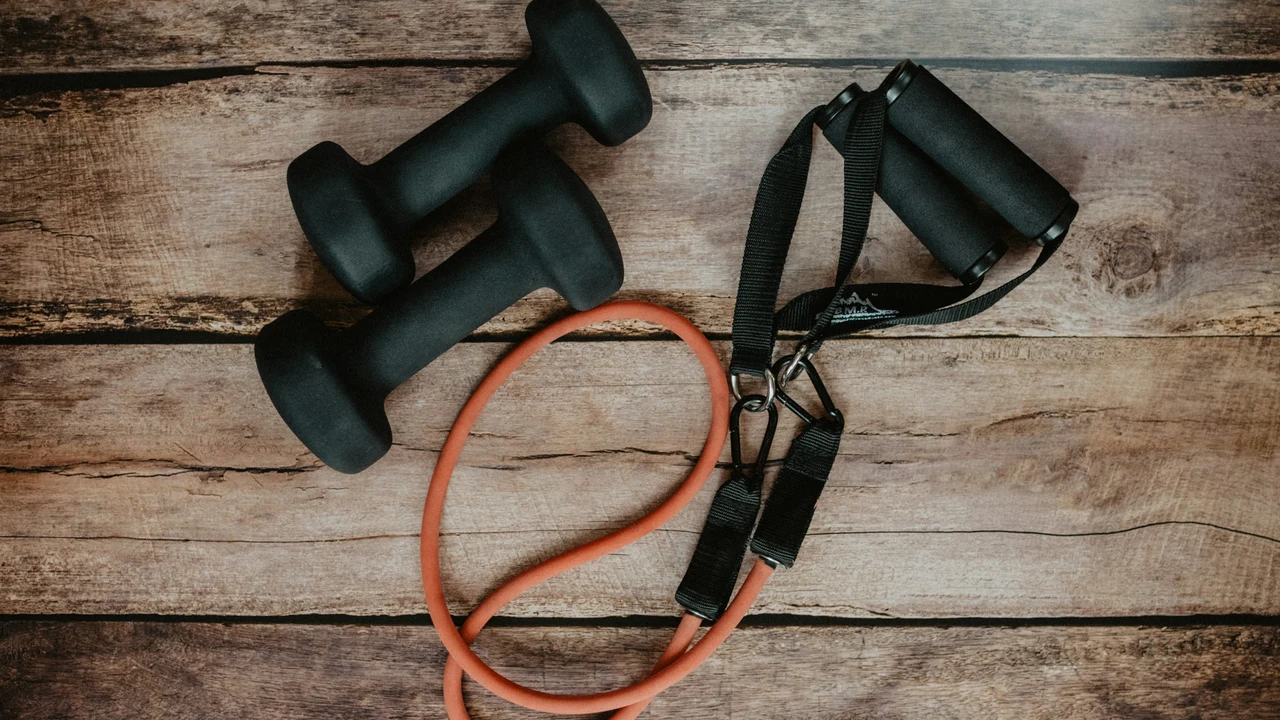
- A tube band set with handles and door anchor: required for the rotation exercises
- A doorframe or sturdy anchor point
- 15-20 minutes for the full routine
The combination of loop bands plus tube bands covers the full shoulder rehab spectrum. Total cost: under $50.
The session
Exercise 1: Band pull-aparts (2 sets of 15)
The simplest exercise and one of the highest-yield for shoulder health.
Setup: Stand or sit upright. Hold one yellow or red loop band with both hands at chest level, palms facing down, arms straight in front of you. Hands should be about shoulder-width apart with the band straight (no slack).
Movement: Pull the band apart by squeezing your shoulder blades together. Your arms move outward and slightly back. The motion comes from your upper back (rhomboids, middle traps), not from your arms or shoulders.
At the end of the motion: Arms are straight out to your sides at shoulder height. The band is fully stretched. Hold for 1 second.
Return: Slowly let the band come back to the starting position. Don’t snap; control the eccentric.
Reps: 15 reps. Rest 30-60 seconds. Repeat for set 2.
Common mistakes:
- Pulling with your arms (shoulders rotate inward) instead of your back
- Shrugging during the movement
- Using too heavy a band; aim for yellow or red, not black
Exercise 2: External rotation against tube band (3 sets of 15)
The core rotator cuff exercise. Targets the infraspinatus and teres minor.
Setup: Anchor a tube band to a door at elbow height. Stand sideways to the door so your painful shoulder is away from the anchor. The hand of the painful side holds the band.
Bend your elbow to 90 degrees. Tuck your elbow against your side. Your forearm should be parallel to the floor, pointing toward the door.
Movement: Rotate your shoulder outward, pulling the handle away from your body. The elbow stays tucked at your side. Your forearm moves from pointing at the door to pointing forward.
At the end of the motion: Forearm points forward. Elbow still at your side. Don’t continue beyond this point.
Return: Slowly let the band rotate your arm back to the starting position.
Reps: 15 reps with the painful side. Rest 30-60 seconds. Repeat for sets 2 and 3.
For symmetry, do the same on the unaffected side after completing the painful side.
Common mistakes:
- Elbow drifting away from the side (often shoulder compensation)
- Using too heavy a band (yellow or red is right for most people)
- Rotating with the trunk instead of the shoulder
- Letting the eccentric (return) phase be too fast
Exercise 3: Internal rotation against tube band (3 sets of 15)
Targets the subscapularis. Often neglected in DIY rehab; matters as much as external rotation.
Setup: Same as external rotation, but now stand sideways with the painful shoulder facing the anchor. The hand of the painful side holds the band.
Elbow at 90 degrees, tucked at your side. Your forearm points across your body toward the door.
Movement: Rotate your shoulder inward, pulling the handle across your body toward your stomach. The elbow stays at your side.
At the end of the motion: Forearm points across your body. Hand near your belly button.
Return: Slowly let the band rotate your arm back to the start.
Reps: 3 sets of 15.
Exercise 4: Face pulls (3 sets of 12)
A compound exercise that works the rear deltoids, middle/lower trapezius, and external rotators simultaneously.
Setup: Anchor the tube band at head height. Stand facing the door. Hold one handle in each hand, arms extended toward the door at shoulder height.
Movement: Pull both handles toward your face, with the elbows high and wide. The elbows should end up behind your shoulders, wider than the hands.
At the end of the motion: Hands at face level. Elbows behind shoulders. Imagine you’re doing a “double biceps pose” but with the band.
Hold for 1 second.
Return: Slowly extend your arms back to the start.
Reps: 12 reps. 3 sets.
Common mistakes:
- Pulling with the biceps (elbows drop)
- Hands ending at chest level (motion too low)
- Going too heavy and losing form
- No pause at the end
Tension progression
For all four exercises, the right tension is:
- Light enough that you can complete all reps with good form
- Heavy enough that the last few reps feel challenging
Start with yellow (Fit Simplify) or yellow TheraBand. Progress to red after 1-2 weeks if the exercises feel too easy. Progress to black (or green TheraBand) after 4-6 weeks if appropriate.
For the rotation exercises specifically: don’t go heavier than what allows perfect form. The rotator cuff is delicate; form matters more than load.
Session frequency
For active shoulder rehab:
- 3-4 sessions per week
- Rest day between sessions (the muscles need recovery)
- Continue for 6-12 weeks for most rotator cuff conditions
For maintenance after rehab:
- 1-2 sessions per week
- Can integrate into general workout warmup or accessory work
Combining with other shoulder care
This 4-exercise foundation pairs well with:
- Manual therapy from a PT (especially in early stages)
- Heat before sessions (warms the tissue)
- Ice after sessions if there’s inflammation
- Stretching (gentle doorway pec stretch, sleeper stretch)
- Movement work (scapular wall slides, prone Y-T-W exercises)
It doesn’t replace specific protocols your PT prescribed. Add to those rather than substituting.
Red flags
Stop the exercises and see a provider if:
- Sharp pain during any movement (not the dull achy fatigue of effort)
- Worsening pain over the days of consistent practice
- Significant weakness developing in the shoulder
- Numbness or tingling in the arm or hand
- Loss of range of motion despite the program
Some shoulder conditions don’t respond to rehab and require imaging or surgical consultation. Don’t push through clear pain signals.
For our gear recommendation
See our Fit Simplify review for the top loop band pick, Best Resistance Bands of 2026 for the broader category, and Best Resistance Band for Rotator Cuff for the condition-specific recommendations.
Final word
Four exercises. Three sets each (two for pull-aparts). 15-20 minutes per session. Three to four sessions per week. Six to twelve weeks of consistency.
That’s the foundation of most shoulder rehab programs. Combined with specific protocols from a PT (if applicable) and reasonable expectations, this routine resolves most cases of impingement, mild rotator cuff tendinopathy, and post-injury weakness.
If pain persists after 8 weeks of consistent work, see a PT. Imaging may be warranted to rule out conditions that require different intervention.
Not medical advice. We publish consumer product reviews; consult a licensed PT before changing your routine. We earn commissions on qualifying Amazon purchases.