Best Resistance Bands for Seniors (2026): Five Low-Tension Picks
Five resistance bands ranked for older adults: lower starting tension, easier-grip handles, fall-safe exercise positions, and which to avoid for first-time users.
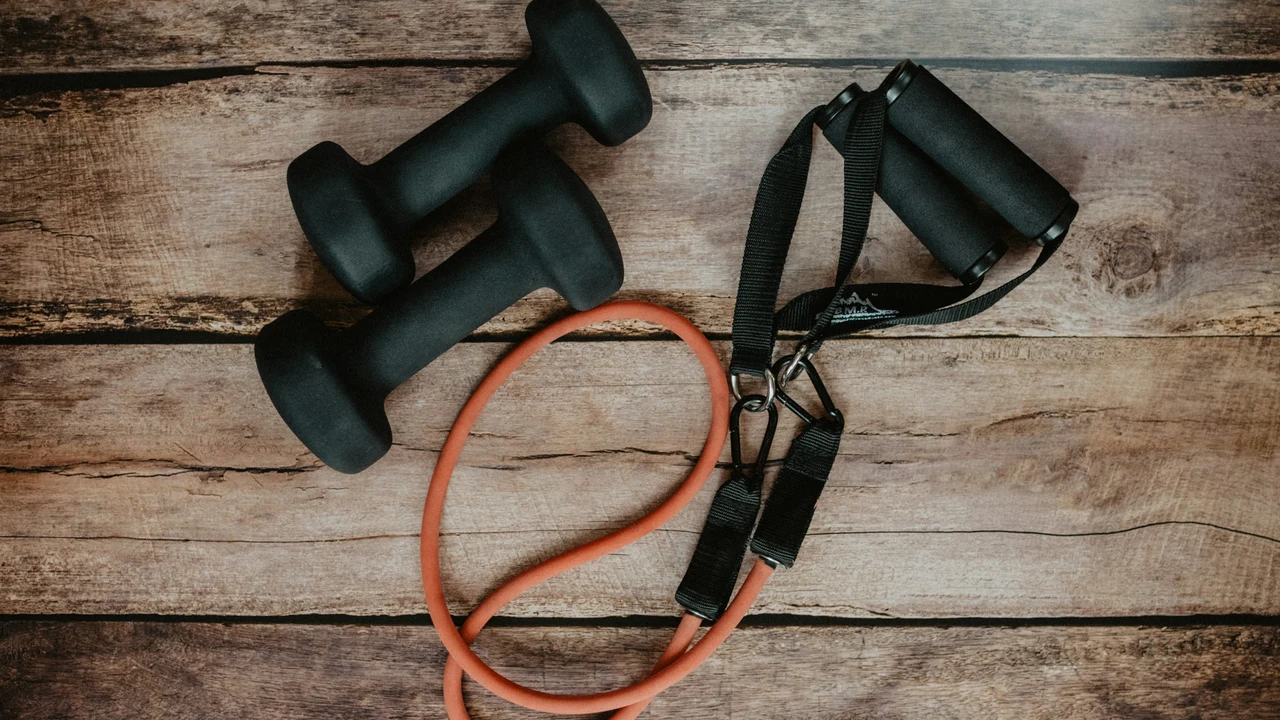

Fit Simplify
Fit Simplify Resistance Loop Exercise Bands with Instruction Guide…
4.5 · 135,414 reviews
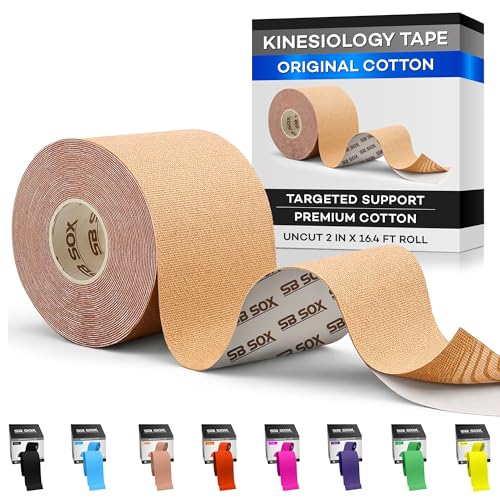
SB SOX
SB SOX Original Cotton Kinesiology Tape Roll – Best Latex Free…
4.3 · 16,394 reviews
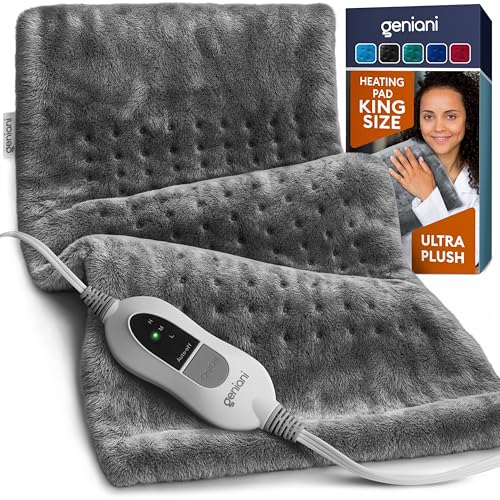
GENIANI
GENIANI Electric Heating Pad for Back Pain & Cramps Relief, Electric…
4.3 · 67,550 reviews

QUTOOL
Lumbar Support Pillow for Office Chair, Office Home Essentials,Gifts…
4.4 · 26,268 reviews

Brand: Bluemaple
6 Pack Copper Compression Socks for Women and Men Circulation-Best…
4.5 · 79,208 reviews
On this page
Strength training has the strongest research support of any single intervention for healthy aging. Reduced fall risk, preserved bone density, maintained independence, all from regular resistance training. The barrier for most older adults isn’t the science. It’s the equipment: free weights are intimidating, gym memberships involve schedule and transportation, and most home equipment is designed for athletes, not for 70-year-olds restarting their strength practice.
Resistance bands solve almost all of these problems. The right starter set is under $20 and fits in a drawer.
The short version
- Top pick, Fit Simplify 5-Pack Loop Bands. Five colored levels from light to heavy, includes pouch, the default consumer answer for first-time band buyers. See our full review.
- Budget pick, generic 5-pack loop bands. Several near-identical sets. Fit Simplify is the trusted brand; budget alternatives work but vary in quality batch-to-batch.
- Premium pick, TheraBand resistance band sets. Clinical-grade bands used in PT offices. More durable, longer-lasting, more sizing options.
- For chair-based exercises, ankle-strap tube bands. Allow seated leg-strengthening exercises with proper resistance vectors.
- Skip, heavy-duty tube bands with handles for first-time users. Too much initial resistance, intimidating, easy to lose grip. Step up to these after building strength with loop bands.
Why bands work especially well for seniors
For older adults building or maintaining strength, bands offer several specific advantages:
| Advantage | Why it matters at 65+ |
|---|---|
| Variable starting resistance | Can start very light, progress gradually |
| No drop risk | Bands don’t fall on your foot or face |
| Multi-plane motion | Train movements (squat, row, press), not just isolated muscles |
| Joint-friendly | Less impact than dumbbells or barbells |
| Compact storage | Live in a drawer when not in use |
| Travel-portable | Maintain strength practice when visiting grandkids |
The main disadvantage: bands have a different resistance curve than free weights (tense at top of motion, easy at bottom). For functional strength (the kind that prevents falls), this is actually similar to how muscles work in daily life.
The picks
Top pick: Fit Simplify 5-Pack Loop Resistance Bands
Why it’s the top: Five color-coded bands from very light (yellow, 2-3 lb equivalent) to heavy (green, 25-30 lb equivalent). For seniors, the very-light option matters; most other sets start at moderate resistance that’s intimidating for first-time users.
135,000+ Amazon reviews at 4.5 stars, the largest review base in the loop-band category.
For seniors specifically: Start with yellow for 1-2 weeks. Once 10-15 reps feel easy, progress to red. The yellow-red progression covers the first 2-3 months of consistent training.
Trade-offs: Loop bands slip up bare thighs during hip-extension exercises. Wear thin leggings or athletic pants for the squat-style exercises.
Read the full review: Fit Simplify Loop Bands Review
Premium pick: TheraBand Resistance Band Set
Why TheraBand specifically: TheraBand is the clinical brand. The same bands you’d encounter at a physical therapy office. Wider range of resistance levels (8 grades from “tan” extra-light to “gold” extra-heavy), individual flat-sheet bands rather than loops, and prescriptive guides for specific exercises and conditions.
For seniors: TheraBand’s “tan” extra-light grade is genuinely lighter than the lightest in most consumer sets. For frail or post-surgical users, this matters.
The flat-sheet design (cut to length, tie or hold the ends) is more versatile than loop bands for upper-body and seated exercises. Loop bands are better for hip-and-glute work.
Trade-offs: Latex bands need replacement more frequently than fabric loops. Tan and yellow grades typically last 3-6 months of regular use.
Budget pick: Generic 5-pack loop bands
Why a generic: Several brands sell visually identical 5-pack loop band sets at lower prices than Fit Simplify. The bands work, but quality varies by batch. Some sets have more consistent resistance levels (yellow really is twice as light as red), some have wildly variable levels.
For whom: Budget-constrained users who’ll be patient about batch variation. Test the bands first; if any feel mislabeled (lightest feels heavier than expected), exchange for a Fit Simplify set.
Chair-based pick: Ankle-strap tube band set
Why ankle straps matter: Many seniors have balance limitations or post-surgical restrictions that make standing band exercises difficult. Ankle-strap tube bands let you do seated leg-strengthening exercises (seated leg curls, seated leg extensions, seated hip abductions) with appropriate resistance.
Setup: Loop one end around a door anchor (included with most sets) or a fixed point. Attach ankle strap to your leg. Perform the movement.
Best for: Wheelchair users, post-hip-replacement patients in early rehab, anyone with balance limitations.
Skip pick: Heavy-duty tube bands with handles for first-time users
Why we’d skip them for first-time seniors: Tube bands with rubber handles start at moderate-to-heavy resistance and don’t include a true-light option. For experienced lifters, they’re great (better grip for upper-body exercises like rows and presses). For first-time senior users, they’re often too heavy and too complicated.
When to consider tube bands: After 2-3 months of consistent loop-band training, when you’ve built tolerance and want to add proper upper-body exercises (rows, presses, curls). At that point, tube bands with handles open up the next level of training.
A starter band program for seniors
For first-time users, this 8-week program builds foundational strength using just the Fit Simplify 5-pack:
Week 1-2: Activation phase
3 sessions/week, 15-20 minutes each, yellow band only:
- Banded glute bridges, 2 sets of 10 (band above knees, lift hips)
- Banded clamshells, 2 sets of 10 each side
- Banded shoulder pull-aparts, 2 sets of 10 (band held with arms in front, pull apart to engage upper back)
- Banded ankle dorsiflexion, 2 sets of 10 each foot (sitting, band around ball of foot)
Week 3-4: Light-resistance phase
Same exercises, progress to red band when yellow feels easy:
- Banded squats (band above knees), 2 sets of 10-12
- Banded standing hip abductions (band above ankles), 2 sets of 10 each side
- Banded rows (band looped around something stable, pull toward chest), 2 sets of 10
Week 5-8: Moderate-resistance phase
Progress to black band on lower-body exercises, red on upper-body:
- All Week 3-4 exercises with heavier band
- Add: banded monster walks (band above ankles, side-step 10 each direction)
- Add: banded chest press (band around back, push forward), 2 sets of 10
After 8 weeks: a noticeable strength improvement for most users. At that point, evaluate whether you want to continue with bands only or add other modalities (dumbbells, gym equipment).
When to involve a physical therapist
For most healthy older adults, beginning a band program independently is reasonable. The cases where a PT consultation first is recommended:
- Recent surgery (orthopedic or cardiac)
- Active osteoporosis with prior fractures
- Significant balance problems (frequent falls)
- Diagnosed degenerative conditions (Parkinson’s, MS, advanced arthritis)
- Recent significant illness (COVID recovery, hospital discharge)
A PT can tailor the program to your specific situation, recommend safer exercise positions, and progress your loading appropriately. Often, 2-4 PT sessions plus an independent home program is the right combination.
Storage and care
Band care for longevity:
- Store away from sunlight. UV degrades latex.
- Avoid skin oils. Skin oil accelerates latex degradation. Wear leggings during hip-extension exercises.
- Don’t over-stretch. Bands stretched beyond 2-2.5x their resting length degrade faster.
- Replace when they feel different. Bands lose tension gradually. When yellow feels like resting flat, replace.
A typical 5-pack lasts 12-24 months of regular use. Replace individual bands as they fail rather than buying full new sets.
FAQ
How heavy of a band should I start with? For most older adults, yellow (lightest). If yellow feels trivial, jump to red. Don’t start with black or heavier as a first-time user.
Will resistance bands really build strength? Yes. Research consistently shows resistance bands provide effective strength training, comparable to free weights for many movements. They’re not just “rehab” tools.
Are bands safe for someone with osteoporosis? Generally yes for moderate-resistance work. Avoid maximal-effort exercises that could stress osteoporotic vertebrae. PT consultation recommended for diagnosed osteoporosis.
Can my partner use the same band? Yes. Bands aren’t size-specific. They’re just resistance levels.
Should I do this every day? 3 sessions per week is sufficient for strength gains. Rest days allow muscle recovery. More frequent training works for some users, but isn’t necessary.
What if I have arthritis in my hands? Loop bands don’t require grip strength (you put them around limbs, not hold them). For tube bands with handles, look for “EZ Grip” or padded handles. Or use loop bands exclusively.
Will bands help with my balance? Indirectly, by strengthening the muscles around your hips and ankles. For balance-specific training, add standing-on-one-leg holds or specific balance exercises in addition to bands.
Where to buy
The picks above link directly to Amazon with our affiliate tag.
For our broader category roundup, see Best Resistance Bands of 2026. For the deep review of the top pick, see Fit Simplify Loop Bands Review.
Final word
For seniors starting resistance training, the Fit Simplify 5-pack is the right answer. Five resistance levels, very-light starting option, low cost, and a community of users (135,000+ reviews) that has thoroughly validated the product.
Add ankle-strap tube bands if you have balance issues that require seated exercises. Upgrade to TheraBand if you want clinical-grade variety. Skip heavy tube bands until you’ve built foundational strength.
Resistance training adds years to active independence. Start with bands, progress as you’re ready, and don’t let “I’m too old to start” become the reason you didn’t do it.
Not medical advice. We publish consumer product reviews; consult a licensed PT before changing your routine. We earn commissions on qualifying Amazon purchases.