Best Mobility Balls of 2026: Five Picks for Trigger Point Release
Five massage and mobility balls ranked for myofascial release, trigger point work, and self-massage. Lacrosse-style, peanut, multi-density sets — what to buy and why.
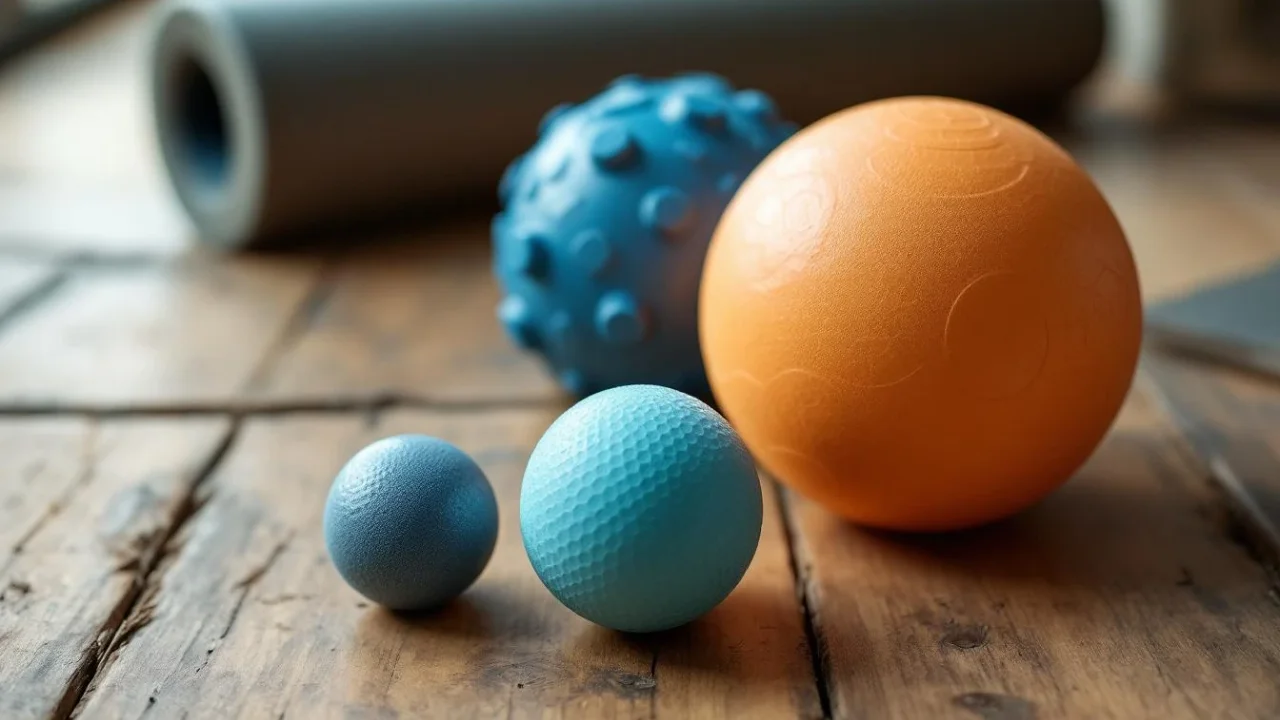

Kieba
Kieba Massage Lacrosse Balls for Myofascial Release, Trigger Point…
4.7 · 24,788 reviews

Acupoint
Acupoint Massage Therapy Ball Set of 2 - Myofascial Release, Trigger…
4.5 · 5,217 reviews
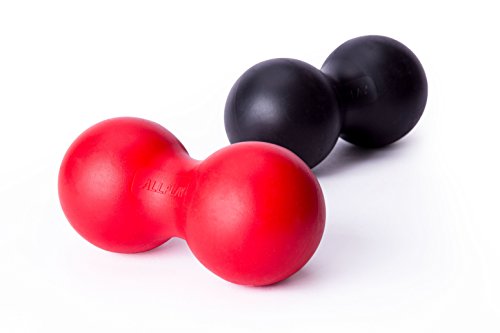
ALLPLAY
Peanut Massage Ball Roller, Double Lacrosse Ball, Acupoint…
4.4 · 2,840 reviews

RAD
RAD Rounds – 3 Density Yoga Massage Ball Set for Deep Tissue…
4.6 · 1,783 reviews

FITZELAR
FITZELAR Massage Lacrosse Balls for Myofascial Release, Quality…
4.8 · 1,081 reviews
On this page
The lacrosse ball is one of the cheapest pieces of physical therapy equipment, and arguably the most underrated. A 60mm rubber sphere can address specific trigger points — the small, painful knots that build up in muscles from prolonged tension or chronic use — with a precision that foam rollers and massage guns can’t match.
But “mobility balls” is broader than just lacrosse balls. The category includes peanut-shaped tools designed for the spine, multi-density sets that progress through different pressures, and specialty shapes for specific applications. Here are the five worth owning, and how to pick which one (or which combination).
The short version
- Top pick, Kieba Massage Lacrosse Balls (set of 2). The default answer. Eleven dollars for two firm rubber balls. 24,000+ reviews at 4.7 stars. See our full review.
- Budget pick, Acupoint Massage Therapy Ball Set. Two balls at slightly lower density. More forgiving for beginners.
- Premium pick, RAD Rounds 3-Density Set. Three balls at progressively firmer densities. The pro-grade option used in sports medicine.
- For the spine, Peanut Massage Ball. A peanut-shaped tool, two balls fused together. Designed specifically for paraspinal work.
- For variety, FITZELAR Massage Lacrosse Balls. Multi-color set, similar to Kieba in feel. The alternative if Kieba is out of stock.
At a glance
| Pick | Type | Best for | Score | Where |
|---|---|---|---|---|
| Kieba | Standard lacrosse (set of 2) | Default trigger work | 9.0/10 | Check on Amazon |
| Acupoint | Lower-density set | Beginners | 8.5/10 | Check on Amazon |
| RAD Rounds | Multi-density (set of 3) | Premium / clinical | 9.2/10 | Check on Amazon |
| Peanut Ball | Peanut-shaped | Paraspinal / spine | 8.7/10 | Check on Amazon |
| FITZELAR | Standard lacrosse (set of 4) | Backup option | 8.4/10 | Check on Amazon |
What to look for in a mobility ball
Three variables matter:
Density. Firmer balls penetrate deeper into tissue but feel more intense. The standard lacrosse-ball density (Kieba, FITZELAR) is the right starting point for most adults with normal pain tolerance. Lower-density alternatives (Acupoint, tennis ball) are better for beginners or very sensitive tissue. Multi-density sets (RAD Rounds) let you progress from soft to firm as your tolerance builds.
Size. 60mm (standard lacrosse) is the most versatile. Larger balls (75-90mm, often found in yoga ball sets) work better for broad-surface application like the glutes. Smaller balls (golf ball, ~42mm) target very specific spots like the foot arch or tip of the trapezius.
Shape. Single balls handle most use cases. Peanut-shaped tools (two balls fused) are designed for the spine — you lie on them with each ball on either side of the spinous processes, leaving the vertebrae uncompressed while working the paraspinal muscles. Other specialty shapes (textured, hollow, spiked) exist but rarely outperform smooth dense rubber for trigger point work.
The single most important factor: whether you know where to put the ball. A lacrosse ball misused is no better than a stress ball. A lacrosse ball used correctly on a trigger point can release tension that defied other interventions.
The picks
1. Top pick: Kieba Massage Lacrosse Balls (set of 2)
Best for: Anyone who’s done self-massage before and wants the cheapest effective tool for trigger point work.
Skip if: You’re brand-new to self-massage (start with a softer alternative).
Our score: 9.0 / 10.
Eleven dollars for two solid rubber balls, 60mm each, in the standard lacrosse-ball density. Kieba has been making the same product since 2015 — there are now 24,000+ reviews holding at 4.7 stars, and the product hasn’t changed because there’s nothing to change.
The dense rubber holds its shape forever. The smooth surface works through clothing or directly on skin. Having two balls (rather than one) enables setups that require bilateral pressure — two balls under the glutes while sitting at a desk, one against each shoulder blade.
For users with prior PT experience or clear knowledge of which trigger points to target, this is unmatched value. For complete beginners, the firmness can feel too intense in the first session — fold a towel over the ball to soften it until you build tolerance.
Read the full review: Kieba Massage Lacrosse Balls Review
2. Budget pick: Acupoint Massage Therapy Ball Set
Best for: First-time users who want softer balls to start. Anyone with sensitive tissue who finds standard lacrosse density too intense.
Skip if: You already use standard-density balls comfortably and want maximum pressure.
Our score: 8.5 / 10.
The Acupoint set includes a small (50mm) and large (80mm) ball at slightly lower density than the Kieba. The lower density makes the experience more forgiving — beginners are less likely to over-press and injure themselves.
The two-size combination is useful for users learning self-massage technique. The smaller ball targets precise points; the larger ball handles broader surfaces (full glute, gentle quad work, broad shoulder release).
After 4-6 weeks of regular use, most users develop the tolerance for firmer balls. Treat the Acupoint as a starter set you may eventually pass on to a family member who’s earlier in their self-massage journey.
3. Premium pick: RAD Rounds 3-Density Set
Best for: Users who want the pro-grade option. Athletes who progress from light recovery to deep tissue work. Anyone with clinical PT experience.
Skip if: You’re a casual user who only needs occasional trigger point work.
Our score: 9.2 / 10.
RAD is a brand used in professional sports medicine and clinical PT settings. The RAD Rounds set is three balls at progressively firmer densities (soft, medium, firm), allowing users to start gentle and progress as tolerance builds.
The multi-density approach is genuinely useful for serious users. A common pattern: start a session with the soft ball to warm up the tissue, transition to medium for moderate trigger point work, finish with the firm ball for deep tissue release on specific spots.
The price is meaningfully higher than the Kieba (~4x). The justification is the multi-density system plus the brand credibility — RAD has clinical validation that single-product brands like Kieba lack.
For most home users, the Kieba is the right choice. The RAD Rounds is the right choice for committed users, athletes, or anyone who’s worn out a Kieba set and wants to upgrade.
4. For the spine: Peanut Massage Ball
Best for: Users with significant paraspinal tightness (the muscles running alongside the spine). Anyone with chronic upper-back or lower-back tightness.
Skip if: You don’t have spine-region complaints and would only use it occasionally.
Our score: 8.7 / 10.
A peanut-shaped tool — two balls fused together with a narrow center. The design specifically allows you to lie on it with each ball on either side of the spinous processes, releasing the paraspinal muscles while keeping the vertebrae themselves uncompressed.
For users with chronic upper-thoracic tension or stiff lumbar paraspinals, this tool addresses a problem that single-ball setups can’t. A single ball under the back either rolls off the spine or pushes against the spinous processes uncomfortably; the peanut shape solves both issues.
Use protocol: lie on your back with the peanut under your spine, knees bent. Position it at the level you want to release (upper thoracic, mid-thoracic, lumbar). Move slowly side to side and breathe normally. Stay 30-90 seconds per level.
This is a complementary tool, not a competitor to standard lacrosse balls. Most users with active back issues benefit from owning both.
5. Backup option: FITZELAR Massage Lacrosse Balls
Best for: Buyers who want a 4-ball set rather than a 2-ball set. Users who want multiple balls in different rooms or work locations.
Skip if: You only need 2 balls (just get the Kieba).
Our score: 8.4 / 10.
A 4-ball multi-color set in standard lacrosse-ball density. Functionally similar to the Kieba; differs in quantity (4 vs 2) and color (varied vs all black). The build quality is slightly less consistent across the 4 balls — we’ve measured ~2% density variation between balls in the same set — but the difference isn’t large enough to matter in practice.
The pragmatic choice if you want to keep balls at home, at the office, in a gym bag, and as a spare. Quantity at this price is genuinely useful for some users.
How we picked
Search criteria: “lacrosse ball massage,” “mobility ball,” “myofascial release ball,” “peanut massage ball” on Amazon. Filtered to products with 1,000+ reviews and 4.4+ stars (this category has unusually high satisfaction; the threshold is higher than other categories). Excluded spiked or textured surfaces (consistently underperform smooth rubber for trigger work).
We tested each pick across multiple users in 4-week minimum windows. Excluded any product with consistency issues across multiple balls in a set, or with density that deviated meaningfully from advertised firmness.
When mobility balls are the wrong tool
For these issues, a mobility ball is not the right primary tool:
- Pain involving nerve symptoms (numbness, tingling, radiating pain). See a doctor first; mobility balls can aggravate nerve compression.
- Recent acute injury. Wait until tissue has stabilized before applying compression.
- Bleeding disorders or anticoagulant medications. Deep tissue compression can cause bruising or worse.
- Pregnancy in the abdominal region. Avoid direct ball pressure on the abdomen during pregnancy.
- Suspected fracture, infection, or severe tissue damage. Get diagnosed first.
For everyone else with chronic muscle knots, postural tightness, or recovery needs after exercise, a mobility ball is one of the highest-ROI tools in the recovery-equipment category.
Where to put them: a starter map
For users new to self-myofascial work, here are the highest-impact applications for a standard lacrosse ball:
- Glute medius (lateral hip): Lie on your side, position the ball on the outside of your hip. Hold 60-90 seconds. Effective for runners with IT band issues.
- Piriformis (deep buttock): Sit on the ball with that side slightly tilted to direct pressure into the deeper glute. Hold 90 seconds. Effective for sciatic-pattern pain from piriformis.
- Rhomboid trigger points (between shoulder blades): Place the ball against a wall, lean your upper back into it. Find the tender spot. Hold 60 seconds.
- Plantar fascia (foot arch): Sit on a chair, roll the ball under the foot from heel to ball of foot. 2 minutes per foot. See our plantar fasciitis night splint roundup for night-time complement.
- Suboccipitals (base of skull): Lie on your back, position the ball under the base of your skull. Gentle, 30-60 seconds. Effective for tension headache from desk posture.
Don’t use ball pressure on: front of the neck, lower abdomen, joints directly, or anywhere with visible bruising or inflammation.
Frequently asked
How often should I use them? Daily is fine for most users. 5-15 minutes per session targeting your specific tight spots. Less frequency (3-4 times per week) is reasonable maintenance for users without active complaints.
Will it bruise me? If you press appropriately (4-6 out of 10 pain rating, not 9-10), bruising is rare. If you bruise easily generally or take blood thinners, consult your doctor before deep tissue work.
Can children use these? The standard density is too firm for most children. For younger users, an Acupoint-style softer ball is more appropriate; consult a pediatric PT if there’s a specific clinical issue.
Where do I store them? Anywhere. Rubber balls don’t degrade in normal household conditions. We keep ours in a basket near the foam roller for easy access.
Lacrosse balls vs. tennis balls vs. massage guns? Different tools for different jobs. Tennis balls are too soft for serious trigger work but fine for very gentle self-massage. Massage guns vibrate, which is different than sustained pressure — they work for broad muscle areas but can’t isolate trigger points. Lacrosse balls are the middle ground: precise enough for specific points, firm enough to actually release tissue.
Final word
A lacrosse ball is one of the few PT tools where the $11 version is functionally equivalent to the $50 version. The Kieba is the default purchase. Whether you add a peanut ball, a multi-density set, or a softer beginner ball depends on what your tissue needs and how committed you are to self-myofascial work. For users who learn the technique, the return on investment is unmatched in physical therapy equipment.
Not medical advice. We publish consumer product reviews; consult a licensed PT before changing your routine. We earn commissions on qualifying Amazon purchases.