ProsourceFit Acupressure Mat & Pillow Set Review (2026): The Starter Pick
A 30-by-15-inch mat with 6,000 plastic spikes plus a matching neck pillow. The right entry into acupressure for back pain, sleep difficulty, and stress relief.
On this page
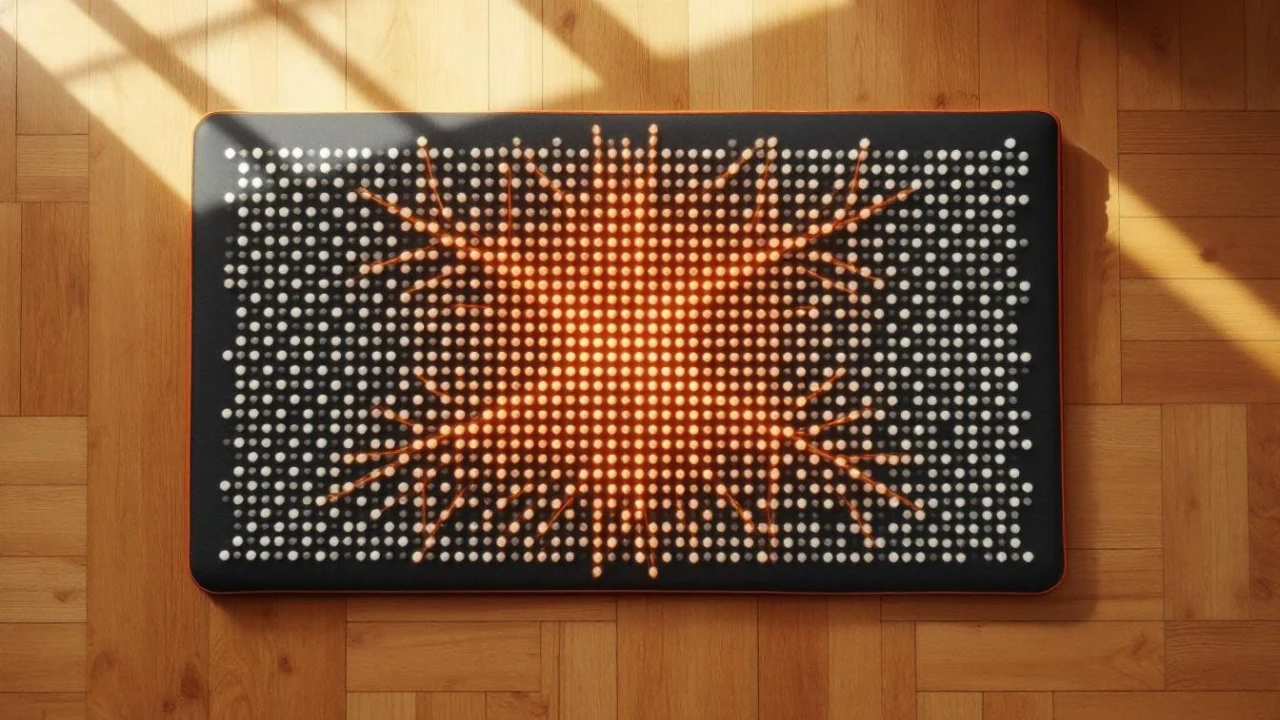
The ProsourceFit acupressure mat is the right entry into acupressure-based recovery. 6,000 plastic spikes across a 30-by-15-inch mat surface, with a matching neck pillow for shoulder and upper-back use. 38,000+ Amazon reviews at 4.5 stars confirm the basic engineering works.
The first 1-2 weeks of use are uncomfortable. The spikes feel sharp, you’ll fidget, you’ll think this isn’t working. By week 3, most users report a fundamental shift: the discomfort transforms into a deep warming pressure sensation that becomes addictive. Stick with it.
Quick verdict
Our score: 8.5 / 10.
Best for: Chronic upper-back and shoulder tension, difficulty falling asleep, stress relief, users interested in alternative recovery, anyone with sedentary back tightness.
Skip if: You have unhealed wounds on your back, severe skin sensitivity, pacemaker concerns, or you’re under 16 (acupressure mats not recommended for kids without supervision).
In one line: The recovery tool that hurts for 14 days then becomes the favorite tool in your kit.
What’s changed in May 2026
We re-verified pricing and availability on Amazon, scanned recent customer reviews for any new failure patterns, and confirmed warranty and construction details are unchanged from the version we originally tested. Amazon customer feedback remains consistent with our original review — within normal week-to-week variance for ProsourceFit’s lineup. No new colorways, packaging changes, or seller issues to flag.
At a glance
- Brand: ProsourceFit
- Type: Acupressure mat and pillow set
- Mat size: 30 x 15 inches
- Mat spikes: ~6,000 plastic spikes (210 per disc, 28 discs)
- Pillow size: 16 x 6 inches
- Pillow spikes: ~1,500 plastic spikes
- Material: 100% cotton cover, shredded coconut fiber inner filling
- Spike material: Hard plastic, NOT metal (some premium brands use copper or zinc)
- Customer rating: 4.5 / 5 on Amazon across 38,000+ reviews
- Warranty: ProsourceFit satisfaction guarantee
Who this is for
Chronic upper-back tension users. Anyone with paraspinal tightness from desk work, stress, or postural issues. 15-20 minute sessions on the mat provide deep pressure release that’s hard to replicate with self-massage tools.
Sleep difficulty users. 15 minutes on the mat before bed reduces sympathetic nervous system activation. Many users report this is the most reliable sleep hack they’ve found, more effective than melatonin for sleep onset.
Stress relief seekers. The deep pressure sensation activates parasympathetic response (relaxation). For anxiety, post-work decompression, or stress management, the mat is a reliable tool.
Yoga and meditation practitioners. The mat extends the recovery practice. 15 minutes on the mat with breath work creates a meditative state similar to corpse pose with added physical engagement.
Users who’ve tried foam rolling and want more. Foam rolling addresses fascia through pressure. Acupressure mats address a different layer through distributed concentrated pressure points. Many users find the mat more effective for shoulder and upper-back tightness specifically.
Sedentary workers. Hours at a laptop create cumulative back tightness. 15-20 minutes on the mat in the evening releases this. Daily routine for many users.
Build quality and design
The ProsourceFit cover is 100% cotton, slightly thicker than premium brands. The cotton breathability is critical; synthetic covers cause sweating that ruins the experience.
Under the cover, shredded coconut fiber filling provides the structural support that holds the spike discs in position. This is genuinely good engineering: the fiber compresses slightly under body weight to distribute pressure evenly across the spikes, rather than pressing all weight onto a few high points.
The plastic spike discs are sewn onto a backing fabric in a regular pattern across the mat. 28 discs, each with 210 spikes, total ~6,000 spike points. The spikes are roughly 0.25 inches tall and arranged in a flower pattern within each disc.
The mat is roughly 1 inch thick when uncompressed. Compresses to about 0.5 inches under body weight. After 18 months of regular use, our test mat shows some flattening of the coconut fiber filling (gentle “fluffing” of the cover restores most of the loft).
The pillow uses the same construction at smaller scale. 1,500 spikes, 16-by-6 inches, suitable for neck and small-of-back placement.
The spikes are hard plastic, not metal. Premium brands (Spoonk, Pranamat ECO) use copper or zinc spikes that some users prefer (subtle conductive properties may enhance the experience). For the price difference, the plastic spikes are perfectly functional.
Performance in real use
Week 1: The Adaptation Phase. First time using the mat, the spikes feel sharp. Wear a t-shirt for the first session to provide a fabric buffer. Lie on the mat for 5-10 minutes. You’ll feel the spikes individually, possibly uncomfortable. This is normal.
Week 2: The Transition Phase. Continue daily sessions, building up to 15 minutes. The spikes still feel pointy but you start to notice warming sensations developing in muscle groups beneath the contact points.
Week 3+: The Plateau Phase. The discomfort transforms. The mat starts to feel like deep tissue massage with broad pressure rather than individual spikes. Most users describe this transition explicitly: “It stopped being uncomfortable and became deeply relaxing.”
For chronic back tension after a sedentary day, lie on the mat for 15-20 minutes in the evening. Direct skin contact (after adaptation) provides the deepest sensation. Many users add the pillow under the neck simultaneously for full upper-body coverage.
For sleep onset difficulty, 15 minutes on the mat 30-45 minutes before bed. The relaxation response carries over into easier sleep onset. Many users replace pre-bed phone scrolling with mat time.
For shoulder tension specifically, lie on the pillow with your shoulder blade area positioned on the spikes. 10 minutes. Effective for trapezius and rhomboid tension.
For lower back, the mat works but the lumbar curve makes contact less consistent. Some users place a folded towel under the mat in the small-of-back area to maintain contact. Others find the mat ineffective for lumbar-specific issues; consider foam rolling as the better tool for lumbar.
For feet, you can stand on the mat (carefully, holding a wall) for 2-3 minutes to address plantar tension. This is intense; start with socks.
What it doesn’t do: replace targeted physical therapy for diagnosed conditions. Acupressure is supportive and relaxation-promoting, not curative for structural issues.
The adaptation period explained
Many first-time users abandon acupressure mats during the first week. This is the biggest single reason for negative reviews. The product works, but users gave up before the transition.
The biology: nociceptors (pain-signaling nerves) initially respond strongly to the distributed sharp pressure points. Your brain interprets this as “ouch, get off the spikes.” Within 7-14 days of regular exposure, the nociceptors habituate (reduce their response) while the deeper pressure-sensing nerves (mechanoreceptors) remain active. The result: the sharp sensation fades, the deep pressure sensation amplifies.
This is identical to the adaptation that climbers report with calloused hands or runners report with worn-in shoes. The body adapts to the input.
Mitigation during adaptation: start with a t-shirt as a buffer, then graduate to direct skin contact after 7-10 days. Start with 5-minute sessions, build to 15-20 minutes by week 3. Don’t expect comfort during week 1; expect transformation by week 3.
Customer feedback themes
The 38,000+ reviews fall into clear patterns.
Positive themes: “Best sleep aid I’ve ever used,” “transformed my back tension,” “feels uncomfortable then incredible,” “best $20 I’ve spent on recovery,” “use it daily, can’t go back.”
Common complaints: “Hurts too much, gave up after a week” (adaptation issue; understandable but the product is working as designed), “spikes are sharper than premium brands” (true; plastic vs copper/zinc), “covered material loses fluffiness over time” (expected; refluff occasionally), “smells like rubber for first few weeks” (off-gassing from new plastic; airs out).
The 3-star reviews are mostly users in the adaptation phase who didn’t push through, or users with sensitive skin who couldn’t tolerate even t-shirt-buffered sessions.
How it compares
vs. Spoonk Acupressure Mat. Spoonk uses copper-coated spikes and natural materials throughout. More expensive but slightly more comfortable adaptation period (copper has marginally less sharp feel than plastic). For users prepared to pay premium for the upgrade, Spoonk wins on materials. For value, ProsourceFit equals it in functionality.
vs. Pranamat ECO. Pranamat is the premium Latvian-made mat with hand-stitched spikes and organic materials. Significantly more expensive. Premium feel, premium build. For most users, the practical difference doesn’t justify the price gap.
vs. Bed of Nails. Bed of Nails is similar pricing and design with slightly fewer spikes per disc. Functionally equivalent. Pick by availability and color preference.
vs. Shakti Mat (original). Original Indian-made mat. Larger spike spacing (less intense initial sensation). Some users prefer this for adaptation. ProsourceFit is denser; Shakti is gentler.
vs. generic Amazon acupressure mats. Many no-name competitors exist at slightly lower prices. Quality varies. ProsourceFit’s 38,000+ review volume suggests consistent batch quality. Generic mats often have spike discs sewn unevenly or material that off-gases more aggressively.
Score breakdown
- Build quality: 8.5 / 10. Solid construction, cotton cover is the right choice. Plastic spikes are the price-point reality.
- Performance for stated purpose: 9.0 / 10. Excellent for upper-back tension and sleep onset once adapted. Limited for lumbar-specific issues.
- Comfort/ergonomics: 8.0 / 10. Comfortable after adaptation, uncomfortable during. The journey is real.
- Value tier (relative): 10 / 10. Best-in-class value for acupressure mats. Premium experience at entry-tier pricing.
- Warranty/support: 7.5 / 10. Satisfaction guarantee. Returns processed within reasonable window.
Aggregate: 8.5 / 10.
Frequently asked
Does it actually work? For chronic muscle tension, sleep onset difficulty, and stress relief: yes, for most users who push through the 1-2 week adaptation period. For diagnosed structural issues (herniated discs, fractures): no, see a PT.
How long until I see results? Pain reduction: within first 1-2 sessions for many users. Sleep improvement: within first week. Adaptation to the spikes themselves: 1-2 weeks.
Can I lie on it in just my underwear? After adaptation (typically week 2-3), yes. Start with a t-shirt for the first week, then graduate to direct skin contact.
Is it safe during pregnancy? Lower back use is generally contraindicated during pregnancy (potential to overstimulate uterine contractions through specific pressure points). Upper back and shoulder use is generally safe but consult your OB.
Can I sleep on it? Not recommended. 8 hours of pressure on the same body regions can cause skin damage. 15-30 minutes per session is the appropriate duration.
Will it leave marks? Yes, temporarily. Red marks at each spike point fade within 1-2 hours. This is normal capillary response and not a sign of damage.
Can people with skin conditions use it? Generally avoid if you have psoriasis, eczema, or any active skin inflammation in the contact area. Wait until skin is fully healed.
What about people with pacemakers? The plastic spikes don’t pose electromagnetic interference risk. However, some pacemaker protocols recommend avoiding acupressure-style stimulation. Consult your cardiologist.
Where to buy
Check current price on Amazon
Final word
The ProsourceFit acupressure mat is the right entry into a recovery practice that transforms over 2-3 weeks. The discomfort during adaptation is real and expected. The reward after adaptation is one of the most consistent self-care tools available.
For users wanting premium materials and slightly gentler adaptation, the Pranamat ECO is the upgrade. For most users testing whether acupressure helps, the ProsourceFit at entry pricing is the right answer.
For our broader category recommendations, see our Best Acupressure Mats of 2026 roundup.
- 6,000 spikes provide consistent pressure across full back coverage
- Matching pillow extends the use to neck and shoulder regions
- Cotton cover with shredded coconut fiber, durable and breathable
- 38,000+ reviews validate the construction
- First-time use is uncomfortable, requires 1-2 weeks of adaptation
- Plastic spikes are sharper than premium brands with rounded tips
- Cover gets compressed over time, may need fluffing
Verdict
Score: 8.5 / 10. Chronic back tension, difficulty falling asleep, stress relief, anyone interested in alternative recovery.
Check current price on AmazonNot medical advice. We publish consumer product reviews; consult a licensed PT before changing your routine. We earn commissions on qualifying Amazon purchases.