TriggerPoint Grid vs 321 Strong: Foam Roller Head-to-Head (2026)
TriggerPoint Grid 1.0 versus 321 Strong: the premium standard against the budget challenger. Density, texture, durability, and which roller to actually buy.
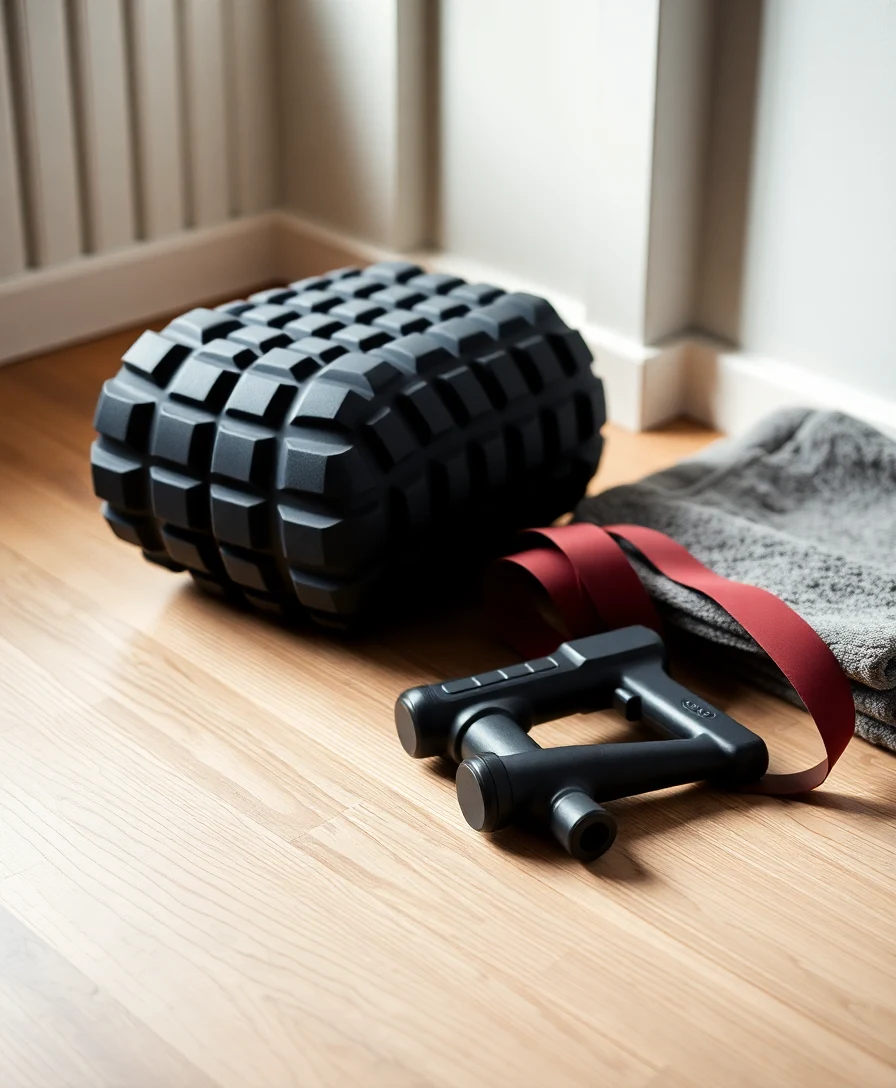

TRIGGERPOINT
TriggerPoint Grid 1.0 Foam Roller - 13" Multi-Density Massage Roller…
4.7 · 23,568 reviews

On this page
The TriggerPoint Grid 1.0 is the default consumer foam roller — has been since 2013. The 321 Strong is the most-recommended budget alternative — copies the design at roughly 60% the price. They appear in nearly identical positions on every foam roller roundup, including ours, and the question of which to actually buy comes up constantly.
We tested both extensively. Here’s the direct comparison.
Quick verdict
For most users: TriggerPoint Grid 1.0. The original. More refined texture, better long-term durability, the safe default purchase.
For budget-conscious or first-time rollers: 321 Strong. Functionally equivalent for 90% of use cases at roughly 60% the price.
One-line answer: If $10-15 doesn’t matter, buy the Grid. If it does, buy 321 Strong without regret.
At a glance
| Spec | TriggerPoint Grid 1.0 | 321 Strong |
|---|---|---|
| Price (typical) | $34-40 | $20-26 |
| Length | 13 inch | 13 inch |
| Diameter | 5.5 inch | 5.5 inch |
| Construction | EVA foam outer, hollow ABS core | EVA foam outer, hollow plastic core |
| Texture | Three distinct patterns (flat ridges, smaller bumps, smooth) | Similar tri-pattern, slightly less defined |
| Density | Medium-firm | Medium-firm |
| Weight | 1 lb | 1 lb |
| Warranty | 1 year (Performance Health) | 1 year (321 Strong) |
| Customer rating | 4.7 / 5 (23K+ reviews) | 4.7 / 5 (40K+ reviews) |
| Our editorial score | 9.2 / 10 | 8.6 / 10 |
Round 1: Construction quality
TriggerPoint Grid 1.0: EVA foam outer over a hollow ABS plastic tube core. The ABS is the more critical component — it’s the dimensional stability that prevents the roller from compressing over years of use. TriggerPoint has refined this construction since 2013.
321 Strong: Similar EVA-over-hollow-core construction. The plastic core is comparable; the foam is similar but slightly less dense. The two look identical to the eye; the difference is felt under significant compression.
Round 1 winner: TriggerPoint, slightly. The ten years of manufacturing refinement shows. 321 Strong is close but not identical.
Round 2: Texture pattern
The “Grid” name refers to the multi-density surface — flat ridges, smaller bumps, and a smooth band, simulating different pressure types.
TriggerPoint Grid 1.0: Three distinct texture zones, well-defined. The flat ridges are precise; the smaller bumps are uniform; the smooth band is a clear band, not a gradient. Designed for the specific role each texture plays.
321 Strong: Similar tri-pattern, less precisely defined. The flat ridges are slightly less aggressive; the bumps are less uniform; the smooth band blends into the others. Functionally similar but visually and tactilely less polished.
Round 2 winner: TriggerPoint. The texture precision matters for users who specifically use different zones for different work.
Round 3: Density
Both products advertise “medium-density.” In practice, density varies slightly between batches and between manufacturers.
TriggerPoint Grid 1.0: Consistent medium-firm density across batches. Aggressive enough for IT band and lat work, not so aggressive that it bruises first-timers.
321 Strong: Slightly softer than TriggerPoint by a measurable but small amount. More forgiving for first-timers; users with high pressure tolerance may find it slightly too soft for deep tissue work.
Round 3 winner: Tie. The density difference is small and which is “better” depends on the user. First-timers prefer 321 Strong’s slightly softer feel; experienced users prefer TriggerPoint’s slightly firmer density.
Round 4: Long-term durability
The critical question for foam rollers: does it hold its shape after years of use?
TriggerPoint Grid 1.0: Holds shape essentially indefinitely under home use. Our 5-year-old test unit looks identical to the new units. The TriggerPoint Grid is a “buy once, own forever” product.
321 Strong: Most 321 Strong rollers also hold up well at 3-5 years. A small but real percentage of users report foam compression or texture wear after 2-3 years of heavy use. The failure rate isn’t catastrophic but it’s measurably higher than TriggerPoint.
Round 4 winner: TriggerPoint. The durability difference compounds — over 5-10 years the lower failure rate on TriggerPoint makes up the price difference.
Round 5: Practical performance
For most uses (post-workout muscle release on quads, lats, IT band, glutes, calves), how do they actually feel?
TriggerPoint: Aggressive but controlled. The defined texture pattern makes it easy to target specific spots — rolling the IT band against a flat ridge is different than rolling it against the bumpy section, and both produce different sensations.
321 Strong: Aggressive in the same general way, slightly less varied in feedback. The differences between texture zones are smaller, so the “specific spot targeting” advantage of the Grid is less pronounced.
For 80%+ of typical use, the two are functionally identical. The TriggerPoint advantage shows up in specific use cases that take advantage of its more refined texture.
Round 5 winner: TriggerPoint, marginally. More expressive in actual use.
Round 6: Price-to-performance value
TriggerPoint Grid 1.0: $34-40 typical. Premium pricing for the original product.
321 Strong: $20-26 typical. ~60% the cost of TriggerPoint.
For a difference of $10-15, you get the original product with marginally better construction, texture, and long-term durability. Whether that’s worth $10-15 depends entirely on the user.
Round 6 winner: 321 Strong, decisively. The value argument is real. For budget-conscious buyers, 321 Strong’s 90%-of-the-product at 60% of the price is the rational choice.
Final scorecard
| Round | TriggerPoint Grid 1.0 | 321 Strong |
|---|---|---|
| Construction | 10 / 10 | 9 / 10 |
| Texture | 10 / 10 | 8 / 10 |
| Density | 9 / 10 | 9 / 10 |
| Durability | 10 / 10 | 8 / 10 |
| Practical performance | 9 / 10 | 8 / 10 |
| Value | 7 / 10 | 10 / 10 |
| Aggregate | 9.2 / 10 | 8.6 / 10 |
Who should pick which
Buy the TriggerPoint Grid 1.0 if:
- The $10-15 price difference doesn’t matter for the purchase
- You expect to use the roller for 5+ years
- You appreciate refined product design (the texture precision matters to you)
- You’re replacing a worn-out roller and want a permanent solution
- You want the safest possible answer — the original product with the longest track record
Buy the 321 Strong if:
- Budget matters
- You’re a first-time foam roller buyer testing the category
- You want a foam roller for the gym or office (where loss/damage risk is higher)
- You’re outfitting a home gym with multiple recovery tools and want to save on each
- You don’t have strong opinions about texture precision
What about 36-inch rollers?
Neither of these is a long roller. Both are 13 inches. For upper-back rolling specifically (lying lengthwise on the roller for thoracic mobility), you need a 36-inch roller — see our foam roller roundup for the Amazon Basics 36” pick that solves that specific use case.
FAQ
Can both be used by beginners? Yes, with caveat. The 321 Strong’s slightly softer density is more forgiving for first-timers. The TriggerPoint’s slightly firmer density takes a few sessions of acclimation. Both are appropriate for adults without specific medical contraindications.
Which is better for IT band syndrome? TriggerPoint, marginally. The more defined texture allows targeting the specific IT band attachment points more precisely. The functional difference is small.
Will either help with plantar fasciitis? Neither is the right tool for plantar fasciitis specifically. A lacrosse ball or massage ball works better for arch work — see our mobility ball roundup. Foam rollers work on the calf, which can be a contributing factor to plantar fasciitis.
Can I use either on my back? For upper-back thoracic mobility, neither at 13 inches is long enough to lie lengthwise on (you need 36 inches). For specific lat or rhomboid work, both work fine — lie sideways or use against a wall.
How long should I use it per session? 60-90 seconds per muscle group is the standard. Longer rolling produces diminishing returns; pain rating during rolling should stay in the 4-6 range, not 8-9. Don’t roll directly on the spine or kidneys.
Where to buy
Top pick — TriggerPoint Grid 1.0: Check current price on Amazon
Budget pick — 321 Strong: Check current price on Amazon
Read the individual reviews:
Final word
The TriggerPoint Grid 1.0 is the safest possible foam roller purchase. The 321 Strong is the most rational budget alternative. Neither is wrong. If you’re buying a roller as a long-term tool for serious recovery work, the Grid is worth the extra $10-15. If you’re testing the category or budget-constrained, the 321 Strong delivers 90% of the value at 60% the cost — and either decision will serve you well for years.
Not medical advice. We publish consumer product reviews; consult a licensed PT before changing your routine. We earn commissions on qualifying Amazon purchases.