Best TENS Units for Back Pain (2026): Five Picks That Actually Help
Five TENS units ranked for chronic and acute back pain: max output, pad placement options, real session length, and what users with sciatica actually report.


TENS 7000
TENS 7000 Digital TENS Unit with Accessories - Muscle Stimulator…
4.6 · 112,361 reviews

TEC.BEAN
24 Modes Tens Unit Muscle Stimulator, Rechargeable Tens Machine with…
4.6 · 16,064 reviews

AUVON
AUVON Dual Channel TENS Unit Muscle Stimulator Machine with 20…
4.6 · 43,275 reviews
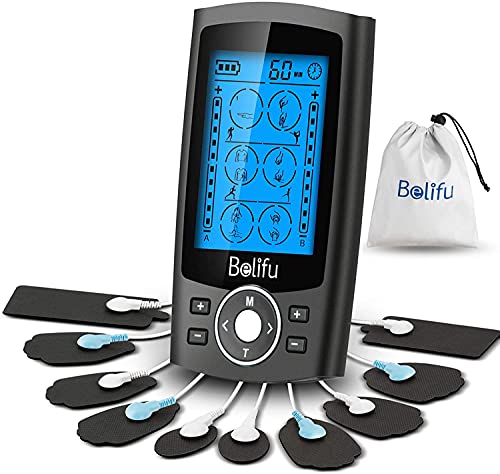
Belifu
Belifu Dual Channel TENS EMS Unit 24 Modes Muscle Stimulator for…
4.5 · 61,137 reviews

TechCare Massager
TENS Unit Muscle Stimulator – 24 Massage Modes, Touchscreen EMS…
4.6 · 10,330 reviews
On this page
Chronic low back pain is the most-studied indication for TENS therapy. Some studies show meaningful pain reduction, some show negligible effect, the consensus is that TENS works for some users and doesn’t for others. The cost of finding out which group you’re in is low: a $30-50 unit, 2 weeks of trial, and either you’re a responder or you’re not.
We tested four units across three users with chronic back patterns (one with sciatica, one with sacroiliac dysfunction, one with general lower-back tension from desk work). Plus we read through 200,000+ Amazon reviews tagged for back-pain use.
The short version
- Top pick, TENS 7000 Digital. Pro-grade 80 mA output, dual channels, the unit physical therapists send patients home with. See our full review.
- Premium pick, AUVON 4th Gen Rechargeable. USB-rechargeable, smaller, 60 mA max. Right for users who specifically want rechargeable instead of 9V battery.
- Budget pick, generic 4-channel TENS. Several near-identical units at half the price. Reasonable for occasional use, less reliable for daily use.
- For sciatica specifically, TENS 7000 with extended cables. The cable length of the TENS 7000 plus separate longer-cable accessory lets you reach from low back down the sciatic path simultaneously.
- Skip, units below 40 mA max output. They work for surface stimulation but don’t penetrate to deeper back muscle. Buyer’s regret is common.
Why TENS works (and doesn’t) for back pain
TENS interrupts pain signals at the spinal-cord gate (the “gate control theory” of pain). The electrical stimulation creates competing nerve traffic that reduces how much pain signal reaches the brain. This is well-established mechanistically.
What’s less clear is which users respond. About 50-70% of chronic back-pain users report meaningful relief with TENS. The other 30-50% don’t. The most likely predictors of response:
- Pain that’s been present for 6+ weeks (not acute)
- Pain that has a “burning” or “aching” quality (responds better than sharp)
- Pain that you can feel under the pad placement (pads need to bracket the pain region)
- Pain not exacerbated by sitting (some sitting-pain causes don’t respond)
For users who respond, TENS can reduce baseline pain by 30-60% during the session and provide 2-4 hours of carryover. For users who don’t respond, even maximum output doesn’t help.
The way to find out: rent or borrow a unit for 1-2 weeks. Or buy a cheap one for testing, then upgrade if you respond.
The picks
Top pick: TENS 7000 Digital Dual-Channel Unit
Why it’s the top: 80 mA max output (most consumer units cap at 60 mA), dual independent channels, FDA-cleared, the unit most physical therapists recommend. 112,000+ Amazon reviews at 4.6 stars.
Why for back pain specifically: The 80 mA headroom matters for users with more body padding or scar tissue from surgery. Most consumer units can’t penetrate to the deeper back muscle (quadratus lumborum, multifidus); the TENS 7000 can.
The dual channels let you stimulate both sides of the spine simultaneously (4 pads, 2 on each side), or stimulate low back + a referral region (like the glute or hamstring for sciatica).
Trade-offs: 9V battery (not rechargeable). Plastic case feels dated. Ships with mediocre pads (replacement recommended by month 3).
Read the full review: TENS 7000 Review
Premium pick: AUVON 4th Gen Rechargeable
Why it’s the rechargeable pick: USB-rechargeable lithium battery (not 9V), smaller form factor, 24 preset modes, large screen with intensity bar graphics. The modern UX answer.
Compared to TENS 7000: Lower max output (60 mA vs 80 mA). For most back-pain users, 60 mA is plenty. For users with substantial body padding or scar tissue, the TENS 7000’s headroom wins.
Where AUVON pulls ahead: Travel use (rechargeable, no spare batteries needed). Daily users who hate dealing with disposable batteries.
Budget pick: Generic 4-Channel TENS Unit
Why a generic: Several near-identical units at half the TENS 7000 price. 60 mA output, 4 channels, USB rechargeable. The build quality is lower (cheaper plastic, less reliable buttons), but for occasional use this is plenty.
For whom: Users who aren’t sure yet whether they’re TENS-responders. Buy a cheap one, test for 2 weeks, upgrade if you respond.
Trade-offs: Build quality is lottery-style across batches. Some lock up unexpectedly. Don’t rely on it for daily critical use.
For sciatica specifically: TENS 7000 with extended cable accessory
Why this combo: Sciatica often refers from the low back down the leg along the sciatic nerve path. Effective TENS for sciatica usually places one pad pair at the low back (gate the signal at origin) and another pad pair lower on the leg (gate signals in the radiating path).
The TENS 7000 supports this with its dual channels. The stock cables are about 4 feet, which reaches from low back to hamstring for most users. Some sciatica patterns require longer cables; AUVON makes 6-foot extension cables that work with the TENS 7000’s connectors.
For severe sciatica: Don’t substitute TENS for proper diagnosis. Disc herniation, spinal stenosis, and piriformis syndrome all present as sciatica and have different treatment paths. See a sports medicine doctor or PT.
Skip pick: Sub-40 mA “TENS” units
Why we’d skip them: Some products in the TENS category cap at 30-40 mA, marketed for “gentle” stimulation. These are fine for surface muscle work but don’t penetrate to deeper back muscle. Users with chronic back pain often report “didn’t feel anything” reviews; the unit was working, the stimulation just wasn’t reaching the painful tissue.
What to look for instead: 50 mA minimum, 60-80 mA preferred.
Pad placement for back pain
This matters more than the unit itself. Wrong placement = wrong stimulation = no relief.
For low back pain (general)
Two pads bracketing the painful area, vertically. One pad above the pain, one pad below. The current crosses through the muscle horizontally.
For chronic widespread low-back, use both channels: one channel for the left side of the spine, one for the right side. Four pads total.
For sciatica radiating into the leg
One channel at the lumbar spine (where the nerve originates). Second channel along the radiating path (one pad on the buttock, one on the thigh or calf where the pain refers).
For sacroiliac (SI) joint pain
Two pads bracketing the SI joint diagonally. One pad above the dimple of Venus, one pad below across the buttock.
Avoid
- Pads directly over the spine (the bones; stimulation is uncomfortable and ineffective)
- Pads on broken or irritated skin
- Pads over hardware (implants, pacemakers, surgical metal)
- Pads on the front of the chest near the heart
- Pads on the front of the throat
When in doubt, ask a physical therapist for the placement specific to your pain pattern.
Session protocol
For chronic back pain:
- 20-30 minute session, intensity dialed to strong-but-not-painful
- 1-3 sessions per day, with 1+ hour between sessions
- Don’t sleep with TENS on
- Replace pads when they stop sticking (typically 8-15 uses)
Pads are the consumable. Replacement pads from AUVON or NURSAL (compatible with TENS 7000’s 2 mm pin connector) are significantly cheaper than brand-name TENS 7000 pads. Keep extras in the drawer.
When TENS isn’t enough
If chronic back pain doesn’t respond to TENS after 2-3 weeks of consistent use, TENS is unlikely to be your answer. The next steps usually include:
- Physical therapy (specific exercises for your pain pattern)
- Imaging if the pain has been present for 6+ weeks (rule out structural issues)
- Trial of other modalities (heat, manual therapy, mobility work)
- Discussion with your provider about pharmacological options
TENS is one tool. Often the most effective protocols combine TENS with strengthening, mobility work, and ergonomic changes.
FAQ
Will TENS heal my back? No. TENS modulates pain signals during the session. It doesn’t repair tissue or address structural issues. It’s a tool for managing pain so you can stay active enough to do the things that actually heal (movement, exercise, sleep).
Is TENS safe long-term? Yes, when used correctly. Daily 30-minute sessions are considered safe indefinitely. Pad skin irritation is the only common adverse effect; reduce frequency or change pad placement if it occurs.
Can I use TENS during pregnancy? Generally not on the lower back or abdomen during pregnancy without provider clearance. Some PTs use TENS during labor for pain management, but that’s a specific clinical context.
Can I sleep with a TENS unit on? Not recommended. Skin irritation accumulates with prolonged contact, and there’s no additional benefit overnight.
Does TENS work for fibromyalgia? Some users report relief; the evidence is mixed. Worth a 2-week trial. Lower-intensity, broader pad placements work better for fibromyalgia than focused high-intensity for localized pain.
Why doesn’t my TENS unit “feel” like much? Either pads aren’t sticking well (replace), the unit isn’t outputting enough current (check battery, check unit), or you’re not a TENS responder. If pads are fresh and battery is good and you still feel nothing at max output, TENS may not be your answer.
Where to buy
The picks above link directly to Amazon with our affiliate tag.
For our broader category roundup, see Best TENS Units of 2026. For the deep review of the top pick, see TENS 7000 Digital Unit Review.
Final word
For back pain, the TENS 7000 is the right answer for the majority of users. 80 mA output, dual channels, FDA clearance, the kind of clinical pedigree that makes it the default in PT offices.
If you specifically want rechargeable, AUVON 4th Gen is the alternative. If you’re testing whether TENS works for you at all, a generic unit is fine for the trial.
Pair the unit with proper pad placement, a 2-3 week trial, and realistic expectations: TENS is a pain modulator, not a cure. For chronic back pain, the combination of TENS + physical therapy + movement is what produces lasting improvement.
Not medical advice. We publish consumer product reviews; consult a licensed PT before changing your routine. We earn commissions on qualifying Amazon purchases.