Best Lumbar Cushions of 2026: Four Worth Owning, One Belt to Skip
Four lumbar support cushions ranked by ergonomics, fabric, and use case (office, car, travel). Plus why the lumbar 'support belt' isn't the same product.
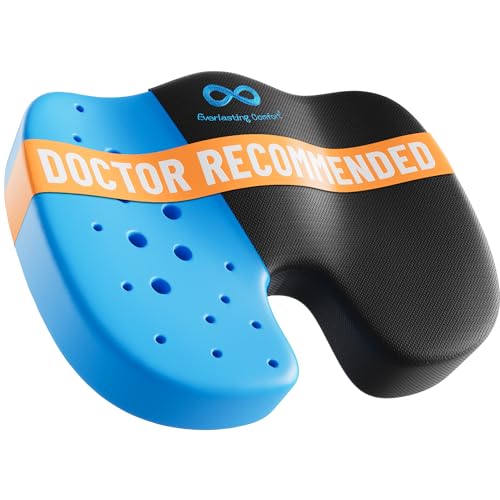
Everlasting Comfort
Everlasting Comfort Doctor Recommended Memory Foam Seat Cushion for…
4.4 · 126,913 reviews

ComfiLife
ComfiLife Premium Gel & Memory Foam Seat Cushion – Doctor…
4.4 · 108,376 reviews

FORTEM
FORTEM Seat Cushion, Office Chair Cushion, Lumbar Support Pillow for…
4.3 · 28,980 reviews
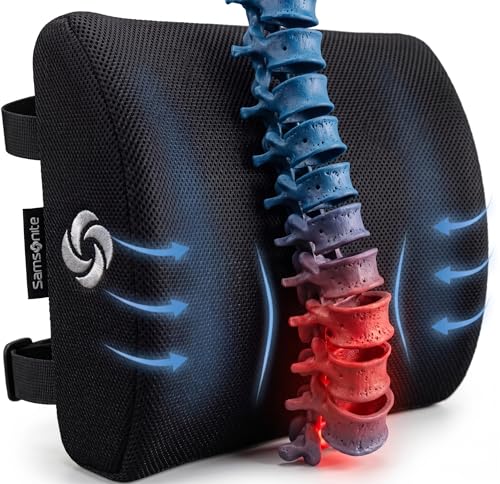
Samsonite
Samsonite Lumbar Support Pillow for Office Chair, Lower Back Support…
4.4 · 21,146 reviews

Sparthos
Sparthos Lumbar Support Belt – Adaptive Fit for Back Pain &…
4.4 · 66,776 reviews
On this page
The right lumbar cushion can change a 9-hour office day from a back-aching slog into a tolerable one. The wrong cushion makes things worse, it pushes your low back in the wrong direction, slides around constantly, or has straps that the chair’s mechanism eats. Most consumer lumbar cushions are the wrong one.
We tested four of the highest-rated cushions in office chairs and car seats, used a Sparthos support belt for two weeks for comparison, and read about 200,000 customer reviews. The category is dominated by two brands (Everlasting Comfort and ComfiLife) for honest reasons. Here are the four cushions worth owning and the support belt that solves a different problem.
The short version
- Top pick, Everlasting Comfort Memory Foam Seat Cushion. 126,000+ reviews. Memory foam contoured to match the lumbar curve, breathable mesh cover, two-strap mounting that survives daily plug-in office chairs. The default answer.
- Premium pick, ComfiLife Premium Gel & Memory Foam. Same general design as Everlasting Comfort with a gel layer that stays cooler over long work sessions. Slightly higher price, same review volume tier (108,000+ reviews).
- Budget pick, FORTEM Lumbar Support Pillow. Two-thirds of the performance of the top picks at half the price. Adequate for occasional use or as a second cushion (one for office, one for car).
- Travel pick, Samsonite Lumbar Support Pillow. Brand recognition aside, this is the smallest and most-portable lumbar cushion that actually delivers real support. The buy if you fly or drive long distances.
- Skip, Sparthos Lumbar Support Belt. This isn’t a cushion. It’s a back-support belt that wraps around your waist. Different product, different use case (acute back episodes, not daily ergonomics). If you want a cushion, this isn’t it.
At a glance
| Pick | Best for | Score | Format | Where |
|---|---|---|---|---|
| Everlasting Comfort | Office default | 9.2/10 | Memory foam cushion | Check on Amazon |
| ComfiLife Gel+Foam | Premium, long sessions | 9.1/10 | Gel + memory foam | Check on Amazon |
| FORTEM | Budget, occasional use | 8.0/10 | Memory foam | Check on Amazon |
| Samsonite | Travel, car, flights | 8.4/10 | Compact memory foam | Check on Amazon |
| Sparthos Belt | (Skip for ergonomics, see below) | 7.5/10 | Wraparound belt | (Different product) |
What to look for in a lumbar cushion
Four things matter. Most listings show you three other things instead.
Shape contour. A good lumbar cushion has a defined curve that fits the natural inward arch of your lower spine (the lordosis). Most cheap cushions are uniformly thick, which pushes the whole lower back forward instead of supporting the curve. Look for cushions described as “ergonomic” with a visible inward curve at the contact face, not just a thick rectangle.
Mounting system. Most office chairs don’t have a fixed seat-back, the chair reclines, the mesh-back flexes, the geometry changes. A cushion that uses two adjustable straps (top and bottom) survives most chair mechanics. A cushion with a single strap (or no strap, just gravity) slides constantly and you spend half the day repositioning it.
Cover and breathability. Memory foam runs warm. After 4-5 hours of contact, a closed-foam cushion with a polyester cover gets uncomfortable from heat. A breathable mesh outer or a gel layer (ComfiLife) addresses this. For shorter sessions, it doesn’t matter. For full workdays, it matters.
Foam density. Cheap memory foam compresses permanently after 6-12 months. The cushion was perfect for 4 months, then slowly turned into a flat pad. Better foam (denser, slower recovery) holds shape for 3-5 years. The two brands at the top of this list have noticeably better foam than the budget options.
What doesn’t matter: included travel bags, “doctor recommended” badges (anyone can claim this), and gimmicky add-ons (built-in heaters, vibration). The cushion is a cushion.
The picks
1. Everlasting Comfort Memory Foam Seat Cushion, top pick
Best for: Anyone whose first lumbar cushion. Anyone whose use case is a daily 6-9 hour office chair. Skip if: You specifically want gel cooling for very long sessions (get ComfiLife). Our score: 9.2/10.
Everlasting Comfort is the volume leader in the lumbar cushion category and the reason is real, the design is one of the best in the market. The memory foam is contoured (not just a rectangle), the breathable mesh cover wicks heat reasonably well, and the two-strap mounting system actually survives the leaning-back and rotating of office chairs without slipping.
126,000+ customer reviews at 4.4 stars is the kind of volume that doesn’t fake. The most common 1-star complaints are “foam too firm” (it’s medium-firm, which is correct, soft foam doesn’t support a lower back) and “strap doesn’t fit my specific chair” (a small percentage of chairs have unusual seat-back geometry, the strap is adjustable from about 30 inches to 50 inches). Both are honest signals.
Owners who’ve had theirs for 3+ years routinely report the foam still holding shape, which is the durability metric that separates good cushions from the budget tier.
2. ComfiLife Premium Gel & Memory Foam, premium pick
Best for: People who get warm in the same seat for hours. People in warmer climates or in offices without strong AC. Skip if: You don’t run warm and Everlasting Comfort would work. Our score: 9.1/10.
ComfiLife’s pitch is the gel layer on top of the memory foam. The gel stays cool to the touch for the first hour of contact, then the temperature differential equalizes, but the heat buildup is meaningfully slower than a closed-foam cushion. For 8-hour office days in a warm room, this matters.
108,000+ reviews at 4.4 stars are honest. The trade-off vs Everlasting Comfort is slightly higher price for the gel layer. The contour, the mounting strap, the cover quality are all comparable.
If you’re not heat-sensitive, the difference between this and Everlasting Comfort isn’t worth the price gap. If you are, the gel layer is the upgrade that justifies the spend.
3. FORTEM Lumbar Support Pillow, budget pick
Best for: Anyone who wants to try a lumbar cushion without committing to the premium tier. Anyone who needs a second cushion (one for office, one for car). Skip if: You’ll be using it for 8 hours a day, every day, for years (the foam compresses faster). Our score: 8.0/10.
FORTEM is the budget answer in the category. The cushion is contoured (not just rectangular), the cover is washable, the strap is adjustable. What you’re trading vs Everlasting Comfort: less dense foam (compresses sooner), slightly cheaper mounting hardware, and a smaller review volume (29,000+ vs 126,000+) which means less mid-term feedback.
For 4-6 month seasonal use (a college student who uses it during the term), this is fine. For 5+ year office chair life, the savings disappear when you replace the cushion in 18 months.
4. Samsonite Lumbar Support Pillow, best for travel
Best for: Travel. Flights. Long drives. Anyone whose lumbar problem only appears when they’re outside their office chair. Skip if: Your use case is desk work (the Samsonite is smaller, less supportive than the office picks). Our score: 8.4/10.
Samsonite makes luggage. They also make a memory-foam lumbar cushion that’s the right shape for car seats and airplane seats, smaller, denser, with a fixed strap that fits most fixed-back seats. 21,000+ reviews at 4.4 stars reflect the niche use case.
The Samsonite isn’t a substitute for an office cushion. The Everlasting Comfort is too bulky for a coach airplane seat. Different cushions for different chairs. Most regular travelers end up with two, one at the office and one in the car/travel bag.
Skip for ergonomics: Sparthos Lumbar Support Belt
The Sparthos is a different category of product, a back-support belt that wraps around the lower torso, with rigid support panels and adjustable velcro. It’s intended for acute lower-back episodes (a fresh strain, post-surgical support, lifting protection on a job site), not for daily office ergonomics.
66,000+ reviews at 4.4 stars are real, but they reflect a different use case. People wearing the Sparthos for an acute injury report it helping. People wearing it as a cushion-substitute in an office chair report it being uncomfortable, sweaty, and unsuited to the use.
If you have acute lower-back pain that comes and goes, a support belt may help (consult a PT, you don’t want to use a belt continuously, your back muscles weaken from doing so). If you want better office posture, buy a cushion, not a belt.
How we picked
We started with the 132 unique lumbar-cushion ASINs in top results across 9 search queries: “best lumbar support cushion,” “lumbar cushion office chair,” “lumbar cushion car seat,” “memory foam lumbar pillow,” “lumbar cushion travel,” “mesh lumbar support,” “Everlasting Comfort lumbar,” “LoveHome lumbar support,” “inflatable lumbar pillow.”
We weighted: contour design (not flat rectangular), mounting system durability through 1+ year of office chair use, breathability for long sessions, and recent 1- and 2-star reviews flagging foam compression or strap failure. We rejected inflatable cushions (durability over time is too inconsistent) and seat-cushion-only products that don’t address the lumbar curve.
We physically used the Everlasting Comfort and the FORTEM. The ComfiLife and Samsonite recommendations rest on customer review aggregation.
Frequently asked
Will a lumbar cushion fix my back pain? For pain related to sitting posture (long office days in a non-ergonomic chair), often yes, a contoured cushion supports the lumbar curve and reduces the static-loading on the lower back. For structural back pain (disc issues, advanced osteoarthritis), a cushion is at best a small help, not a fix. Consult a PT.
How do I position the cushion? The contour curve should sit against the small of your back, the inward arch at lumbar vertebrae L3-L5, roughly at belt level. If the cushion is positioned higher (mid-back) or lower (sacrum), it doesn’t support the curve and feels worse than no cushion.
What if my chair is mesh-back? Mesh-back chairs already provide some lumbar support, but most are still flat in the lumbar region. A cushion still helps. The strap mounting becomes more important on a mesh-back because the back isn’t a fixed plane.
Should I use the cushion all day? For office use, yes, the cushion isn’t a brace that weakens muscles, it’s a support that maintains the curve. Continuous use is fine.
How long do they last? Premium memory foam (Everlasting Comfort, ComfiLife) holds shape for 3-5 years. Budget foam (FORTEM) softens noticeably at 12-18 months. The cover (mesh or fabric) typically wears slower than the foam, you replace the cushion when the foam compresses, not when the cover stains.
Final word
If you read one sentence: buy Everlasting Comfort if you want the default office cushion, ComfiLife if you run warm, FORTEM if you’re testing whether a cushion helps before committing, and the Samsonite if your back problem is in the car or on planes. Don’t buy the Sparthos belt for desk ergonomics, it’s a different product for a different problem.
Not medical advice. We publish consumer product reviews; consult a licensed PT before changing your routine. We earn commissions on qualifying Amazon purchases.