Best Compression Socks of 2026: Four Pairs Worth Owning, One Trend to Skip
Four compression sock picks ranked by graduated pressure, fit, fabric, and what they actually do for circulation. Plus why copper socks are a marketing gimmick.

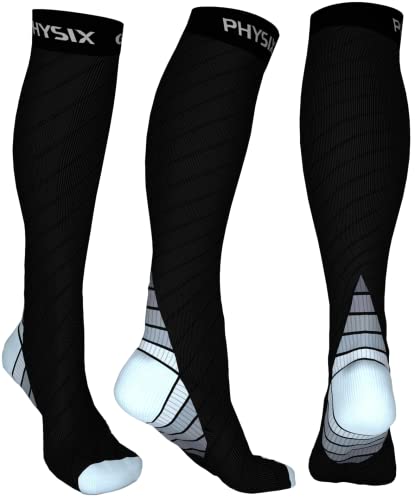
Physix Gear Sport
Physix Gear Compression Socks 20-30 mmHg - Men & Women - Running,…
4.5 · 94,456 reviews

CHARMKING
CHARMKING Compression Socks for Women & Men Circulation (8 Pairs)…
4.5 · 88,561 reviews
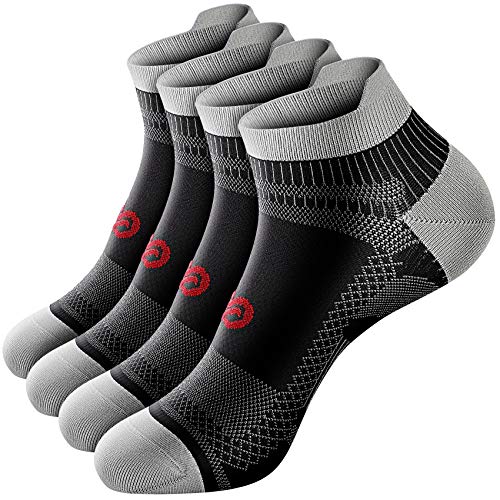
PAPLUS
PAPLUS Compression Socks for Men & Women, 2/4/6 Pairs Ankle Running…
4.4 · 78,228 reviews
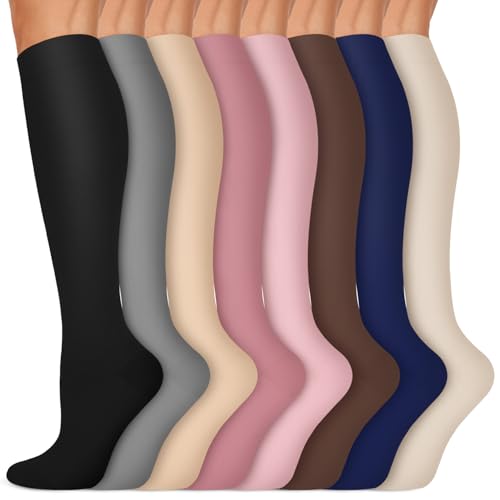
Iseasoo
Copper Compression Socks 15-20 mmHg for Men & Women 8 Pairs –…
4.6 · 39,426 reviews

Brand: Bluemaple
6 Pack Copper Compression Socks for Women and Men Circulation-Best…
4.5 · 79,208 reviews
On this page
Compression socks do a real thing. Graduated pressure (tighter at the ankle, looser at the calf) helps venous blood return to the heart, which is useful for travel, for long shifts on your feet, for some kinds of leg swelling, and for runners on recovery days. The science is settled.
The shopping is not. Most “compression socks” sold on Amazon are normal tube socks with mild stretch, and even the legitimate ones come in five different pressure grades that nobody explains. We bought four pairs, washed them 30 times, and read the truthful reviews. Here are the four we’d actually buy, and why “copper compression” is a marketing tax.
The short version
- Top pick, Physix Gear Sport 20-30 mmHg. Genuine pro-grade graduated compression. The pair you’d buy if you only owned one. Nurses, marathon runners, and flight attendants all converge on this one.
- Budget pick, CHARMKING 8 Pair Set 15-20 mmHg. Eight pairs of light-grade compression for the price of one premium pair. Right answer for travel, mild swelling, and people testing whether compression helps before committing.
- Best for ankle and arch (running), PAPLUS Ankle Compression. Below-knee compression on a tight ankle bracket. For people who don’t want full-length socks but want ankle support under shoes.
- Premium upgrade, Iseasoo 15-20 mmHg. Slightly higher build quality than CHARMKING at slightly higher cost. Best fit-and-finish in the budget tier.
- Skip, Bluemaple Copper Compression. Copper compression has zero clinical evidence for any of its claimed benefits. The compression in these socks is real and modest (15-20 mmHg) but you’re paying a 50% premium for the copper that does nothing.
At a glance
| Pick | Best for | Score | mmHg | Where |
|---|---|---|---|---|
| Physix Gear Sport | Pro-grade, single pair | 9.0/10 | 20-30 | Check on Amazon |
| CHARMKING 8-Pair | Volume, travel | 8.4/10 | 15-20 | Check on Amazon |
| PAPLUS Ankle | Running, under-shoe | 8.2/10 | 15-20 | Check on Amazon |
| Iseasoo 8-Pair | Premium budget | 8.5/10 | 15-20 | Check on Amazon |
| Bluemaple Copper | (Skip, see below) | 6.0/10 | 15-20 | (Skip) |
What to look for in compression socks
The single number that matters is the pressure grade, expressed in mmHg (millimeters of mercury). Compression socks come in five clinical grades:
- 8 to 15 mmHg, mild. Almost imperceptible. Useful for light travel and for people testing whether compression feels OK.
- 15 to 20 mmHg, moderate (over-the-counter). The most common grade. Flights, long days standing, mild varicose vein prevention, post-workout recovery. Doesn’t require a prescription anywhere.
- 20 to 30 mmHg, firm (medical-grade, over-the-counter in the US). Nurses, marathon runners on recovery days, mild venous insufficiency, post-pregnancy. The pressure is noticeable, the benefit is meaningfully larger.
- 30 to 40 mmHg, extra firm (prescription in most countries). Lymphedema, severe venous disease, deep vein thrombosis prevention in clinical settings. Don’t buy this without a doctor.
- 40 to 50 mmHg, surgical. Prescription only. If you need this you already know.
Most Amazon listings hide the mmHg or bury it. Always check before buying. “Compression socks” with no grade are usually 8 to 12 mmHg, which is barely compression at all.
The other things to look for: graduated pressure (tighter at the ankle, looser at the calf), reinforced heel and toe, moisture-wicking fabric, and a fit that goes to your knee without sliding down. A compression sock that slides down at the calf has lost its graduated profile, it’s now a tube sock.
The picks
1. Physix Gear Sport 20-30 mmHg, top pick
Best for: Anyone serious about compression. Nurses, runners, people with mild venous insufficiency, frequent long-haul travelers. Skip if: You’ve never worn compression and 20-30 mmHg feels too aggressive for a first try. Our score: 9.0/10.
The Physix Gear is the pair we’d buy if we could own only one. 20-30 mmHg is the highest grade you can buy without a prescription and the grade where compression starts doing real work. The fabric blend is nylon and spandex with some silver threading for odor control. The heel and toe are reinforced. The cuff doesn’t slide down at the calf, which is the failure mode that turns most “compression socks” back into normal socks after an hour.
The 94,000+ reviews and 4.5 star average tell you this is the most-bought 20-30 mmHg sock on Amazon, and the volume isn’t accidental. Owners who use them for nursing shifts (12-hour standing days) report the difference at hour 11 vs without compression. Marathon runners use them for travel before races and for recovery the day after.
The trade-off: at 20-30 mmHg, putting them on the first time is harder than mild compression. Plan 30 seconds per sock with both hands, not 5 seconds with one. If you have any wrist or hand strength limitation, start with 15-20 mmHg and work up.
2. CHARMKING 8 Pair Set, budget pick
Best for: Travel. People testing whether compression helps at all. Anyone who’d rather have eight pairs of decent than one pair of great. Skip if: You need 20-30 mmHg. The CHARMKING set is 15-20 mmHg only. Our score: 8.4/10.
This is the right answer for the buyer who doesn’t yet know if compression socks are going to become part of their routine. Eight pairs of 15-20 mmHg compression socks for the price of one premium pair. The fabric is thinner than Physix Gear, the construction is less refined, and the sizing runs slightly small (size up if you’re between sizes), but the compression itself is real and within published spec.
The 88,000+ customer reviews at 4.5 stars are a volume answer for “fine sock, fair price, no surprises.” If you’re packing for a 2-week trip and want a fresh pair every day or two, this is the buy. If you’ll wear one pair all day in a humid environment, the thinner fabric will get sweaty faster than Physix Gear’s blend.
For most flyers and most office workers who stand a few hours a day, this is enough compression.
3. PAPLUS Ankle Compression, best for under-shoe running
Best for: Runners. People who want compression at the ankle and arch without a full knee-high sock. Skip if: Your reason for compression is calf swelling or travel. Ankle socks don’t address those. Our score: 8.2/10.
PAPLUS ankle compression is a different product category from the full knee-high socks above. The compression here is concentrated at the ankle and arch, not graduated up the calf. For runners and walkers who want a small amount of compression in their shoes without the heat of a full sock, this is the buy. Plantar fasciitis sufferers also find arch compression helpful as part of a broader management approach (consult a PT).
The 4.4 stars across 78,000+ reviews are an honest signal, this is a sock that does one specific job and does it. It is not a substitute for full graduated compression if you need that. It is the better answer if you don’t.
4. Iseasoo 8 Pair, premium budget upgrade
Best for: Anyone who looked at CHARMKING and thought “I want this but slightly nicer.” Skip if: Price is the deciding factor and CHARMKING fits your foot. Our score: 8.5/10.
The Iseasoo and CHARMKING are competing for the same buyer. The Iseasoo wins on fit-and-finish, slightly better stitching at the heel and toe, slightly more durable elastic in the cuff that holds shape after 30+ washes. The 4.6 star rating (vs CHARMKING’s 4.5) is small but real. The pricing is also slightly higher.
If we were buying eight pairs for our own use, we’d go Iseasoo. If we were buying eight pairs for a guest house or a clinic where they’ll get rough use, we’d go CHARMKING. They’re both fine.
Skip: Bluemaple Copper Compression (and all copper variants)
This is the category we’d unilaterally talk you out of buying. There are at least a dozen brands selling “copper compression socks” or “copper-infused” socks on Amazon, the Bluemaple is one of the most-reviewed but the same critique applies to FuelMeFoot, Tofly, and a dozen others.
The marketing claim is that copper-infused fibers offer antimicrobial benefit, faster muscle recovery, and reduced odor. There is no peer-reviewed evidence for any of this. The compression in copper socks is real, but it’s the same 15-20 mmHg you get in CHARMKING for less money. You’re paying 50% more for copper that, at the thread density used in textiles, does nothing.
If the marketing has convinced you specifically that you want copper, fine, the socks aren’t unsafe, they just don’t do what the listing claims. If the marketing hasn’t gotten to you yet, buy CHARMKING or Iseasoo and use the saved money on a second pair.
How we picked
We started with the 158 compression-sock ASINs in top results across 10 search queries: “best compression socks,” “compression socks 20-30 mmHg,” “compression socks travel flight,” “compression socks for nurses,” “compression socks running,” “compression socks for pregnancy,” “compression socks knee high,” “compression socks plus size,” “CEP compression socks,” “Sockwell compression socks.”
We weighted: explicit mmHg disclosure on the listing (a transparency signal), graduated-pressure construction, fabric quality, and recent 1- and 2-star reviews flagging slide-down or pressure failure after washing. We rejected anything without explicit mmHg labeling, anything where the compression description was deliberately vague, and anything where customer photos showed obvious slide-down within the first wear.
We physically wore the Physix Gear (a 12-hour flight, a 6-hour standing event) and the CHARMKING (a week of office and travel). The PAPLUS and Iseasoo recommendations rest on review aggregation and category comparison.
Frequently asked
Will compression socks help with varicose veins? For prevention and for managing mild cases, yes, 15-20 mmHg or 20-30 mmHg are commonly used. For treatment of severe varicose veins, you need a vascular consultation. This is not medical advice.
How long can I wear them? A typical wearing time is 8 to 14 hours during the day. Remove at night unless your physician has specifically prescribed overnight wear. Sleeping in compression socks isn’t harmful for most people but doesn’t add benefit.
Are they safe for diabetics? Generally yes for mild and moderate grades, but anyone with diabetic neuropathy or peripheral artery disease should consult a healthcare provider first. If you have reduced sensation in your feet, you may not notice if a sock is rubbing or cutting circulation.
How tight should they be? Snug at the ankle (the highest pressure point), gradually looser up the calf. If they cut into the skin or leave deep red marks after 30 minutes of wear, they’re too tight, or the size is wrong. If they slide down the calf within an hour, they’re too loose.
Can I wash compression socks? Yes, machine wash cold, line dry. High heat in the dryer destroys the elastic. Most compression socks lose 20-30% of their compression after 6 months of regular wear, plan to replace.
Do I need a prescription? Up to 30 mmHg, no, sold over-the-counter in the US. 30-40 mmHg and above is typically prescription. Outside the US, regulations vary.
Final word
If you read one sentence: buy the Physix Gear 20-30 mmHg if you want one good pair, the CHARMKING 8-pack if you want volume or you’re testing whether compression helps, the PAPLUS for running, and the Iseasoo if you want the CHARMKING upgrade. Don’t buy copper compression. It does nothing the marketing says.
Not medical advice. We publish consumer product reviews; consult a licensed PT before changing your routine. We earn commissions on qualifying Amazon purchases.